
Dialog window

Now Accepting Applications for the 2026-2027
Public Health & Primary Care Leadership Institute


APPLICATION DEADLINE IS JUNE 30,2026.

Click here for more information!

Region IV Public Health Training Center
  • ABOUT THE CENTER
    • About the Center
    • Central Office
    • Our Impact
    • Community-Based Training Partners
      • Alabama Public Health Training Network
      • East Tennessee State University
      • Kentucky Population Health Institute
      • Medical University of South Carolina
      • Mississippi Public Health Institute
      • North Carolina Public Health Association
      • USF Center for Leadership in Public Health Practice
    • Technical Assistance Providers
    • Steering Committee
  • TRAININGS
    • Training Catalog
    • Leading Public Health Podcast
    • Georgia Hurricane Response Hub
    • Georgia Boards of Health
    • SNAP-Ed
  • LEADERSHIP INSTITUTE
  • FIELD PLACEMENTS
  • NEWS AND EVENTS
  • RESOURCES
  • CONTACT US
Select Page
Understanding the Uniform: A Campfire Chat on Connecting Military Culture with Public Health

Understanding the Uniform: A Campfire Chat on Connecting Military Culture with Public Health

by R-IV PHTC | Dec 3, 2025 | Featured Training, Training

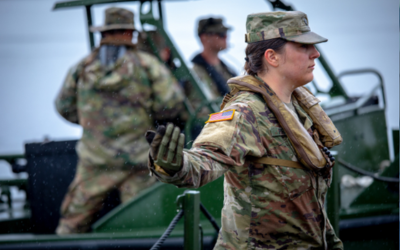
Caucasian woman in military uniform in front of a boat with other military officers onboard

Understanding the Uniform: A Campfire Chat on Connecting Military Culture with Public Health

Year:  2025  |  Competency/Strategic Skill: Community and Partner Engagement, Public Health Fundamentals  |  Priority Topic: N/A  |  Setting:  Online  |  Format:  On-Demand  |  Sponsor:  Emory University/Central Office

access training

Overview:

This is a 90-minute recording of a live webinar on January 20, 2026, from 12 – 1:30 pm ET. 

Join us for a Campfire chat focused on understanding the National Guard community and its public health needs. This presentation examines the intersection of National Guard culture and public health, emphasizing the vital role of service members in community health initiatives and emergency response. We will discuss the impact of military training on public health preparedness, the importance of Integrated Primary Prevention, and collaboration with public health agencies during crises.  Attendees will gain insights into the cultural values of the National Guard and their implications for enhancing public health outcomes at all levels.

Presenter:

Dr. Mike Crum is a former Marine with a Bachelors, Master’s and Doctorate in Social Work. For the last 10 years Mike has worked in Suicide Prevention at a community and macro level educating about the needs of service members and veterans. Mikes work within the Army National Guard has led to training thousands of Soldiers in Resilience and Suicide Prevention Education. Mike currently works to address protective and risk factors for the Army National Guard and informs leadership how to curb trends on topics like suicide, domestic violence, sexual assault and abuse and neglect. For the past 10 years Mike has worked in the world of Suicide Prevention, training, education, and working to make more suicide safer communities. 

Mike currently lives in Florida with his wife who works for the Public Health Department in Maternity/Infant Healthcare, they have two cats Mr. Twiggers and Mr. Milo. They both love the sunshine and beach! 


Learning Objectives: By the end of this webinar, participants will be able to:

  • Summarize integrated primary prevention for public health and the National Guard.
  • Recognize the protective and risk factors that National Guard Soldiers experience.
  • Identify ways to collaborate and partner with their primary prevention teams to enhance public health support for National Guard Soldiers.

CERTIFICATE: The course contains two modules: a module to access the webinar and an evaluation module. After accessing these modules, learners will earn a certificate of completion.

This project is supported by the Health Resources and Services Administration (HRSA) of the U.S. Department of Health and Human Services (HHS) under grant number UB6HP31680, Public Health Training Centers for $4,348,992. This information or content and conclusions are those of the author and should not be construed as the official position or policy of, nor should any endorsements be inferred by HRSA, HHS or the U.S. Government.


access training

Search the Training Catalog

  • Competencies/Strategic Skills

  • Priority Topics

  • Settings

  • Training Format

  • Sponsor

  • Training Year

  • Reset Filters
On the Road Across the Lifespan

On the Road Across the Lifespan

by R-IV PHTC | Nov 21, 2025 | Featured Training, Training

Mom putting a young toddler into a car seat

On the Road Across the Lifespan

Year:  2025  |  Competency/Strategic Skill: Policy Development, Public Health Fundamentals  |  Priority Topic: N/A  |  Setting:  Online  |  Format:  On-Demand  |  Sponsor:  Emory University/Central Office; Injury Prevention Research Center at Emory University (IPRCE); Children’s Healthcare of Atlanta

access training

Overview:

This is a 90-minute recording of a live webinar on December 15, 2025, from 10:30 am – 12 pm ET. 

Join us for an insightful webinar focused on transportation safety across all stages of life. From the earliest years to aging adults, ensuring safety on the road is a shared responsibility that evolves with age and experience. This session will highlight key aspects of transportation safety, providing valuable information and practical strategies for everyone involved in travel, passengers, or drivers.

Presenters:

Maneesha Agarwal, MD, is an associate professor in pediatrics and emergency medicine at Emory University School of Medicine and an attending physician in pediatric emergency medicine at Children’s Healthcare of Atlanta. She completed her undergraduate and medical school degrees at the University of North Carolina in Chapel Hill followed by pediatrics residency in the Boston Combined Residency Program in Pediatrics and pediatric emergency medicine fellowship at Carolinas Medical Center in Charlotte. 

Dr. Agarwal is a grant-funded injury prevention researcher whose work spans poisoning prevention, child passenger safety, teen driving, firearm safety, consumer product safety, and adverse childhood experiences. She is the co-founder of the Children’s Healthcare of Atlanta Injury Prevention Program (CHIPP) and serves as a pediatric injury prevention expert for the Injury Prevention Research Center at Emory. 

Dr. Agarwal serves on national committees for the American Academy of Pediatrics and the Injury Free Coalition for Kids, where she has helped shape policy and educational initiatives to reduce childhood injuries.  She is a sought-after speaker at national conferences and has contributed to technical reports and policy statements on helmet use and injury prevention. Through her leadership and advocacy, Dr. Agarwal works to advance evidence-based strategies that keep children safe in vehicles, on bikes, and in all aspects of daily life. 

Elizabeth Head, MPH, specializes in aging and injury prevention. As deputy director for Injury Prevention at the Georgia Department of Public Health, Elizabeth manages staff working on injury prevention across the lifespan. She also coordinates Georgia’s CDC BOLD project. This project aims to incorporate public health into dementia work happening in the state. Ms. Head works with national, state, and local partners to achieve equitable and sustainable approaches to Injury Prevention. 

Jonathan Rupp, PhD, MS, is a Professor in the Emory Department of Emergency Medicine, Director of the Injury Prevention Research Center at Emory (IPRCE), and Vice Chair for Innovation and Discovery in the Department of Emergency Medicine. Dr. Rupp’s research incorporates aspects of engineering, epidemiology, and behavioral science to further knowledge on the causes of injury and violence and to develop, test, and implement interventions to prevent injury, violence, and overdose. 

His research involves (1) monitoring rates of seat belt use and distracted driving in the State of Georgia, (2) characterizing the factors that influence injury in motor-vehicle crashes, (3) developing tools that safety engineers can use to assess the performance of occupant protection systems, (4) leading surveillance of adverse and positive childhood experiences in the Georgia, and (5) studying ED based methods to reduce suicide. 

Lin Snowe, CPST-I, is Senior Program Coordinator at Children’s Healthcare of Atlanta and serves on the state office team of Safe Kids Georgia. Her work focuses on supporting over 30 local statewide coalitions with programming and coalition development/management with the goal of preventing unintentional injuries in children. Her primary areas of work have been with underserved communities and building partnerships with key stakeholders to effectively disseminate injury prevention education and safety equipment where needed. She is an executive member of the Georgia Child Passenger Safety Board and is a Certified Child Passenger Safety Technician Instructor, with active involvement in Georgia’s occupant safety task teams. Lin graduated from Northeastern University in Boston with a B.S. in Business Administration and has spent most of her professional career in medical devices and technology sales.


Learning Objectives: By the end of this webinar, participants will be able to:

  • Describe key trends in transportation safety data and its impact on transportation policy and guidelines.
  • Identify how to promote a responsible driving culture.
  • Apply strategies and programs that promote safe driving practices and policies.

CERTIFICATE: The course contains two modules: a module to access the webinar and an evaluation module. After accessing these modules, learners will earn a certificate of completion.

This project is supported by the Health Resources and Services Administration (HRSA) of the U.S. Department of Health and Human Services (HHS) under grant number UB6HP31680, Public Health Training Centers for $4,348,992. This information or content and conclusions are those of the author and should not be construed as the official position or policy of, nor should any endorsements be inferred by HRSA, HHS or the U.S. Government.
access training

Search the Training Catalog

  • Competencies/Strategic Skills

  • Priority Topics

  • Settings

  • Training Format

  • Sponsor

  • Training Year

  • Reset Filters
Grant Me Strength: Budgeting Basics for Public Health Warriors

Grant Me Strength: Budgeting Basics for Public Health Warriors

by R-IV PHTC | Oct 31, 2025 | Featured Training, Training

Elderly couple talking with a social worker

Grant Me Strength: Budgeting Basics for Public Health Warriors

Year:  2025  |  Competency/Strategic Skill: Program Planning; Resource Management and Financial Planning  |  Priority Topic: N/A  |  Setting:  Online  |  Format:  On-Demand  |  Sponsor:  Emory University/Central Office

access training

Overview:

This is a 90-minute recording of a live webinar on November 12, 2025, from 12:00 pm-1:30 pm ET. 

Budgeting doesn’t have to be intimidating—it’s a core skill for every public health professional navigating grant-funded programs. This session breaks down the essentials of budgeting and reframes financial management as a strategic tool for program success. Through practical examples and a touch of humor, participants will learn how to build budgets that support sustainability, align with program goals, and tell a compelling story of impact.

Beth Orero, MPH, is a seasoned public health warrior with over 15 years of experience managing complex, grant-funded programs across government, nonprofit, and healthcare sectors. She currently serves as a Learning Strategist at Emory Centers for Public Health Training and Technical Assistance, where she supports CDC Diabetes Prevention Program recipients through strategic training, technical assistance, and peer learning initiatives.

Beth brings deep expertise in budget oversight, financial modeling, and securing federal funding to support sustainable public health infrastructure. She has successfully managed a $29M CDC Cooperative Agreement across 46 jurisdictions, led rapid workforce deployment, and improved financial systems for programs exceeding $10M in funding. Her work includes securing $1.5M in federal SPNS funding for HIV care and digitizing monitoring systems to enhance fiscal transparency.


Learning Objectives: By the end of this webinar, participants will be able to:

  • Identify key components of a public health program budget, including common funding categories and allowable costs. 
  • Describe how budgeting supports program planning, performance tracking, and sustainability in grant-funded environments. 
  • Apply basic financial principles to public health scenarios, including budget development, revisions, and reporting. 
  • Recognize the value of integrating financial management into public health practice to strengthen program outcomes and resource advocacy. 

    CERTIFICATE: The course contains three modules: a module with pre-session questions, a module to access the webinar and an evaluation module. After accessing these modules, learners will earn a certificate of completion.

    This project is supported by the Health Resources and Services Administration (HRSA) of the U.S. Department of Health and Human Services (HHS) under grant number UB6HP31680, Public Health Training Centers for $4,348,992. This information or content and conclusions are those of the author and should not be construed as the official position or policy of, nor should any endorsements be inferred by HRSA, HHS or the U.S. Government.

    access training

    Search the Training Catalog

    • Competencies/Strategic Skills

    • Priority Topics

    • Settings

    • Training Format

    • Sponsor

    • Training Year

    • Reset Filters
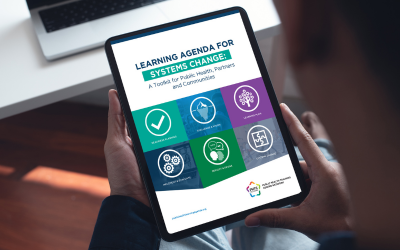
    Learning Agenda for Systems Change: A Toolkit for Public Health, Partners, and Communities

    Learning Agenda for Systems Change: A Toolkit for Public Health, Partners, and Communities

    by R-IV PHTC | Sep 18, 2025 | Featured Training, Training

    Learning Agenda for Systems Change: A Toolkit for Public Health, Partners, and Communities

    Year:  2025  |  Competency/Strategic Skill:  Leadership and Systems Thinking |  Priority Topic:  N/A  |  Setting:  Online  |  Format:  On-demand  |  Sponsor:  Emory University/Central Office

    ACCESS TRAINING

    Overview:

    This is a recording of a one-hour webinar held on August 28, 2025. There are no prerequisites. Participants will need a broadband internet connection (Google Chrome or Mozilla Firefox are preferred browsers) and computer speakers. For technical support, please contact emoryphtc@emory.edu.

    This one-hour webinar offers a deep dive into the Learning Agenda for Systems Change (LASC) framework. Attendees will gain a comprehensive overview of the framework’s phases and components, and learn how it can be applied to support workforce development planning and systems change efforts.

    The Learning Agenda for Systems Change (LASC) offers a practical framework for reimagining workforce development, providing an action-oriented, iterative process to use transformative learning as a driver for lasting change. This is important because it’s not just about making changes in how we think, but in how we think together. To really change systems, we need to learn and share ideas in a way that connects us socially.

    The LASC supports teams in collaboratively identifying the root causes of complex challenges and developing a multi-level, multi-pronged learning approach to address the conditions needed for systems change.

    Whether you’re just learning about systems change or are an experienced systems change leader, the LASC Toolkit 2.0 provides a process, tools, and resources to help guide your thinking. If you’re ready to learn more about how the Learning Agenda for Systems Change can be used in your workforce development planning efforts, we hope you’ll join us!

    To download your copy of the Learning Agenda Toolkit 2.0, please go to www.publichealthlearningagenda.org.

    Learning Objectives: By the end of this webinar, participants will be able to: By the end of the webinar, attendees will be able to:

    • Explain the context and rationale for the Learning Agenda for Systems Change.
    • Recognize the Learning Agenda for Systems Change framework.
    • List potential applications for the Learning Agenda for Systems Change.

    CERTIFICATE:  The course contains two modules: a module to access the webinar and an evaluation module. After accessing both modules, learners will earn a certificate of completion. When the certificate is available, learners will see a Certificate button on their dashboard.

    This work is supported by funds made available from the Centers for Disease Control and Prevention (CDC) of the U.S. Department of Health and Human Services (HHS), National Center for STLT Public Health Infrastructure and Workforce, through OE22-2203: Strengthening U.S. Public Health Infrastructure, Workforce, and Data Systems grant. The contents are those of the author(s) and do not necessarily represent the official views of, nor an endorsement, by CDC/HHS, or the U.S. Government.

    ACCESS TRAINING

    Search the Training Catalog

    • Competencies/Strategic Skills

    • Priority Topics

    • Settings

    • Training Format

    • Sponsor

    • Training Year

    • Reset Filters
    The Violence Project: How to Stop a Mass Shooting Epidemic

    The Violence Project: How to Stop a Mass Shooting Epidemic

    by R-IV PHTC | Sep 16, 2025 | Featured Training, Training

    Elderly couple talking with a social worker

    The Violence Project: How to Stop a Mass Shooting Epidemic

    Year:  2025  |  Competency/Strategic Skill: Public Health Fundamentals  |  Priority Topic: Mental Health  |  Setting:  Online  |  Format:  On-Demand  |  Sponsor:  Emory University/Central Office; Injury Prevention Research Center (IPRCE) at Emory University

    access training

    Overview:

    This is a 90-minute recording of a live webinar on September 30, 2025. This webinar was co-sponsored by the Region IV Public Health Training Center and the Injury Prevention Research Center at Emory University (IPRCE).

    This webinar will bring together professionals working across various areas of injury and violence prevention to explore the epidemiology of mass violence and its connections to other forms of injury. Dr. Jillian Peterson will present data related to perpetrators of mass violence to build a shared understanding of common risk factors for perpetration of mass violence. Attendees will learn practical actions that practitioners, public health professionals, and clinicians can take to decrease an individual’s likelihood of perpetrating mass violence.

    NOTE: This webinar will reference themes of violence, including but not limited to, domestic violence, suicide, and mass shooting, which some individuals may find distressing.

    Dr. Jillian Peterson, PhD, is a Professor of Criminology at Hamline University, Director of their Forensic Psychology Program, and also Executive Director of the Violence Prevention Project Research Center. She earned her PhD in Psychology and Social Behavior from the University of California, Irvine. 


    Learning Objectives: By the end of this webinar, participants will be able to:

    • Explore the links: How mass violence connects to other injuries and violence.
    • Understand the risk: Key data on perpetrators and common warning signs.
    • Take action: Practical steps for public health professionals, clinicians, and practitioners to prevent violence.

      CERTIFICATE: The course contains two modules: a module to access the webinar and an evaluation module. After accessing these modules, learners will earn a certificate of completion.

      This project is supported by the Health Resources and Services Administration (HRSA) of the U.S. Department of Health and Human Services (HHS) under grant number UB6HP31680, Public Health Training Centers for $4,348,992. This information or content and conclusions are those of the author and should not be construed as the official position or policy of, nor should any endorsements be inferred by HRSA, HHS or the U.S. Government.

      access training

      Search the Training Catalog

      • Competencies/Strategic Skills

      • Priority Topics

      • Settings

      • Training Format

      • Sponsor

      • Training Year

      • Reset Filters

      Communicating Public Health in Plain Language

      Communicating Public Health in Plain Language

      by R-IV PHTC | Sep 15, 2025 | Featured Training, Training

      Elderly couple talking with a social worker

      Communicating Public Health in Plain Language

      Year:  2025  |  Competency/Strategic Skill: Public Health Fundamentals  |  Priority Topic: N/A  |  Setting:  Online  |  Format:  On-Demand  |  Sponsor:  Emory University/Central Office

      access training

      Overview:

      This is a 90-minute recording of a live webinar on October 15, 2025, from 12:00 pm-1:30 pm ET.  

      This webinar on effective public health communication is designed to equip participants with the skills needed to reach diverse audiences across various industries and communities. During this interactive session, participants will discover the critical importance of clear, accessible communication in public health settings and learn practical plain language techniques that can transform complex health information into understandable, actionable messages. Through real-world examples and proven strategies, attendees will gain hands-on experience in tailoring their communication approach for different audiences, ensuring their public health messages resonate with and effectively serve diverse populations.

      Charlotte Hughes Huntley, PhD, MPH, is an accomplished epidemiologist and public health leader with over 25 years of experience in healthcare and public health. She is a multidisciplinary public health entrepreneur. As CEO and principal consultant at DrCHHuntley, LLC, she provides epidemiologic consulting solutions to nonprofit organizations, community health foundations, and state government agencies. As Founder of Public Health Entrepreneurs, LLC, Dr. Huntley leads in providing support to public health entrepreneurs. As Founder of IBET Community, she provides a space dedicated to advancing the health and well-being of influential women. Dr. Huntley is the host of the Public Health Epidemiology Conversations Podcast, with over 400 weekly episodes, the Public Health Entrepreneurs Podcast, and the Tribal Epidemiology Centers Podcast.


      Learning Objectives: By the end of this webinar, participants will be able to:

      • Analyze the importance of clear public health communication across different industries and community contexts.
      • Apply plain language principles and techniques to transform complex public health information.
      • Create tailored public health messages for specific audiences using appropriate communication strategies.

        CERTIFICATE: The course contains two modules: a module to access the webinar and an evaluation module. After accessing these modules, learners will earn a certificate of completion.

        This project is supported by the Health Resources and Services Administration (HRSA) of the U.S. Department of Health and Human Services (HHS) under grant number UB6HP31680, Public Health Training Centers for $4,348,992. This information or content and conclusions are those of the author and should not be construed as the official position or policy of, nor should any endorsements be inferred by HRSA, HHS or the U.S. Government.

        access training

        Search the Training Catalog

        • Competencies/Strategic Skills

        • Priority Topics

        • Settings

        • Training Format

        • Sponsor

        • Training Year

        • Reset Filters

        The Story Behind the Numbers: Understanding the Art of Narrative Construction in Public Health

        The Story Behind the Numbers: Understanding the Art of Narrative Construction in Public Health

        by R-IV PHTC | Sep 15, 2025 | Featured Training, Training

        Elderly couple talking with a social worker

        The Story Behind the Numbers: Understanding the Art of Narrative Construction in Public Health

        Year:  2025  |  Competency/Strategic Skill: Communication  |  Priority Topic: N/A  |  Setting:  Online  |  Format:  On-Demand  |  Sponsor:  Emory University/Central Office

        access training

        Overview:

        This is a 90-minute recording of a live webinar on October 21, 2025. 

        Discover the power of storytelling as a tool for public health impact. In this interactive session, participants will explore the key elements of compelling stories that resonate with diverse audiences, while learning to navigate ethical and cultural considerations such as consent, dignity, and stigma when integrating local narratives. The webinar will also guide participants in building a mini logic model to connect storytelling efforts to measurable outcomes, equipping them with practical tools to assess impact and strengthen community engagement.

        Lamarr Lewis is a dedicated advocate, author, and agent of change. With a focus on community-based mental and public health, he works with diverse groups including individuals living with psychiatric disabilities, people in recovery from substance abuse, and at-hope youth (He does not use the term at-risk). 

        His career spans over twenty years with experience as a therapist, consultant, public speaker, facilitator, trainer, and human service professional. Lamarr integrates restorative justice principles into his work, fostering accountability, healing, and equity in the communities he serves. 

        He is an alumnus of Wittenberg University, graduating with a Bachelor of Arts in Sociology with minors in Africana Studies and Religion. He later received his master’s degree in clinical mental health counseling from Argosy University. 

        He has been a featured expert for such organizations as Boeing, Region IV Public Health Training Center, Fulton County Probate Court, Mississippi Department of Health, the Mississippi Band of Choctaw Indians, ASTHO, NNPHI, and many more. 

        His lifelong mission is to leave the world better than how he found it.


        Learning Objectives: By the end of this webinar, participants will be able to:

        • Describe 1-2 key elements of an effective story that resonate with diverse audiences in the context of public health.
        • Identify ethical and cultural considerations (consent, dignity, stigma) when integrating local narratives.
        • Build a mini logic model to assess the impact of storytelling on public health outcomes through measurable indicators.

          CERTIFICATE: The course contains three modules: a module with pre-session questions, a module to access the webinar, and an evaluation module. After accessing these modules, learners will earn a certificate of completion.

          This project is supported by the Health Resources and Services Administration (HRSA) of the U.S. Department of Health and Human Services (HHS) under grant number UB6HP31680, Public Health Training Centers for $4,348,992. This information or content and conclusions are those of the author and should not be construed as the official position or policy of, nor should any endorsements be inferred by HRSA, HHS or the U.S. Government.

          access training

          Search the Training Catalog

          • Competencies/Strategic Skills

          • Priority Topics

          • Settings

          • Training Format

          • Sponsor

          • Training Year

          • Reset Filters
          Hosting Future Public Health Leaders: The Why and How of Investing in Students

          Hosting Future Public Health Leaders: The Why and How of Investing in Students

          by R-IV PHTC | Sep 4, 2025 | Featured Training, Training

          Elderly couple talking with a social worker

          Hosting Future Public Health Leaders: The Why and How of Investing in Students

          Year:  2025  |  Competency/Strategic Skill: Leadership and Systems Thinking; Public Health Fundamentals  |  Priority Topic: N/A  |  Setting:  Online  |  Format:  On-Demand  |  Sponsor:  Emory University/Central Office

          access training

          Overview:

          This is a 90-minute recording of a live webinar on October 7, 2025, from 12:00 pm-1:30 pm ET.  

          Have you ever thought about the impact you could make by mentoring a student, even if your organization has not hosted interns before? This session, Hosting Future Public Health Leaders: The Why and How of Investing in Students, will explore why investing in students matters for the future of every profession and how you can create positive, practical learning experiences. You will gain insights on how to set clear expectations, communicate effectively, and support learners while also strengthening your own organization. Whether you work in public health, education, government, or a community-based organization, this webinar will leave you with strategies and inspiration to nurture the next generation of leaders. 

          Janie Cambron, RS, MPH, DrPHc, has more than 20 years of experience in public health practice and academia. She serves as the inaugural Director of Land Grant Engagement in the University of Kentucky College of Public Health, advancing the land-grant mission by fostering reciprocal partnerships with Cooperative Extension, the Martin-Gatton College of Agriculture, Food and Environment, community organizations, state and local public health agencies, and professional associations. Her work emphasizes building sustainable collaborations that strengthen communities, advance experiential learning, and support the development of future leaders. 

          In March 2020, Cambron was one of eight national scholars accepted into the Bloomberg Fellowship DrPH program at Johns Hopkins University. Previously, she was Associate Dean for Practice and Workforce Development at UK, serving as Principal Investigator on multiple workforce development initiatives, including the HRSA Public Health Scholarship Program, with a focus on aligning academic training with public health practice needs and investing in the growth of others. Cambron also spent over a decade at the Kentucky Department for Public Health, where she co-led the effort to achieve the agency’s first national public health accreditation and held leadership roles in quality improvement, program management, epidemiology, and environmental health. A Kentucky Public Health Leadership Institute scholar, trainer, and mentor, Cambron has also served as an instructor for the Community Leadership Institute of Kentucky (CLIK).  

          She maintains professional credentialing as a Registered Sanitarian (RS) and is deeply committed to service, experiential learning, and cultivating the next generation of health professionals through innovation, mentorship, and leadership. 


          Learning Objectives: By the end of this webinar, participants will be able to:

          • Explain the value of mentoring and hosting students as a strategy to strengthen the future workforce in any field.
          • Identify effective practices for onboarding, setting expectations, and supporting students with diverse backgrounds and needs.
          • Develop approaches to create meaningful, mutually beneficial learning experiences that foster growth for both students and hosts.

            CERTIFICATE: The course contains three modules: a module for pre-session questions, a module to access the webinar, and an evaluation module. After accessing these modules, learners will earn a certificate of completion.

            This project is supported by the Health Resources and Services Administration (HRSA) of the U.S. Department of Health and Human Services (HHS) under grant number UB6HP31680, Public Health Training Centers for $4,348,992. This information or content and conclusions are those of the author and should not be construed as the official position or policy of, nor should any endorsements be inferred by HRSA, HHS or the U.S. Government.

            access training

            Search the Training Catalog

            • Competencies/Strategic Skills

            • Priority Topics

            • Settings

            • Training Format

            • Sponsor

            • Training Year

            • Reset Filters

            Frontline Fatigue: Addressing Trauma and Burnout for Public Health Professionals

            Frontline Fatigue: Addressing Trauma and Burnout for Public Health Professionals

            by R-IV PHTC | Aug 4, 2025 | Featured Training, Training

            Elderly couple talking with a social worker

            Frontline Fatigue: Addressing Trauma and Burnout for Public Health Professionals

            Year:  2025  |  Competency/Strategic Skill: Change Management; Leadership and Systems Thinking; Public Health Fundamentals  |  Priority Topic: Mental Health  |  Setting:  Online  |  Format:  On-Demand  |  Sponsor:  Emory University/Central Office; James and Jennifer Harrell Center for the Study of Family Violence at the University of South Florida College of Public Health

            access training

            Overview:

            This is a 90-minute recording of a live webinar on September 17, 2025. 

            Public health professionals are often the invisible responders during times of crisis, chronic community trauma, and systemic differences. While serving others, many are experiencing unprecedented levels of fatigue, moral distress, secondary trauma, and burnout — often without the space or support to process it. 

            This webinar, hosted by the Region IV Public Health Training Center in collaboration with the James and Jennifer Harrell Center for the Study of Family Violence at the University of South Florida College of Public Health, offers a trauma-informed and systems-oriented approach to understanding and addressing occupational stress in the public health workforce. Participants will explore how individual experiences of burnout are often shaped by broader organizational and societal structures — and will walk away with practical tools to promote wellbeing and resilience at both the personal and institutional levels. 

            Whether you’re new to the field or a seasoned practitioner, this session aims to validate, resource, and restore those working at the intersection of care, fairness, and public health.

            Abraham Salinas, MD, PhD, MPH, MACE, CDVS, is a Research Assistant Professor at the University of South Florida, College of Public Health in Tampa, Florida. Dr. Salinas serves as the Director for the James and Jennifer Harrell Center for the Study of Family Violence and is the Assistant Director for the Center of Excellence in Maternal Child Health at the College of Public Health. Dr. Salinas brings an interdisciplinary background in violence prevention, adverse child experiences, maternal child health epidemiology, public health, medicine, (pediatrics), and community-based participatory research studies. He is a Certified Domestic Violence Specialist and a Certified Trauma-Informed Care Coach. He oversees various research studies as principal investigator and contributes to scientific, technical, and programmatic activities in addition to serving as a subject matter expert on community-based research, dating violence, and trauma-informed research.

            Christiana (“Chrissy”) Zimmer, MPH, CPH, is a passionate public health professional specializing in disability/accessibility, violence prevention, trauma, and public health policy and practice. Chrissy received her Master of Public Health (MPH) degree from the University of South Florida, College of Public Health, and holds the national Certification in Public Health (CPH).  Chrissy has worked on various projects related to research, program planning, and evaluation. With a background in academic ghost writing, Chrissy uses her writing skills, love for strategic planning, and systems thinking as her professional foundation to improve public health programs. Chrissy has had the honor of serving as the Training and Community Outreach Coordinator at the James & Jennifer Harrell Center for the Study of Family Violence since 2022.

            Learning Objectives: By the end of this webinar, participants will be able to:

            • Differentiate between burnout, compassion fatigue, secondary traumatic stress, and moral distress in public health settings.
            • Identify individual and organizational signs of chronic stress and trauma exposure.
            • Explore the systemic and structural contributors to workforce burnout in public health.
            • Apply trauma-informed, resilience-oriented strategies to support wellbeing for themselves and their teams.
            • Describe practical ways organizations can foster a culture of psychological safety, peer support, and collective care.

              CERTIFICATE: The course contains two modules: a module to access the webinar and an evaluation module. After accessing these modules, learners will earn a certificate of completion.

              This project is supported by the Health Resources and Services Administration (HRSA) of the U.S. Department of Health and Human Services (HHS) under grant number UB6HP31680, Public Health Training Centers for $4,348,992. This information or content and conclusions are those of the author and should not be construed as the official position or policy of, nor should any endorsements be inferred by HRSA, HHS or the U.S. Government.

              access training

              Search the Training Catalog

              • Competencies/Strategic Skills

              • Priority Topics

              • Settings

              • Training Format

              • Sponsor

              • Training Year

              • Reset Filters

              Collaborations to Prevent Overdose

              Collaborations to Prevent Overdose

              by R-IV PHTC | Jul 14, 2025 | Featured Training, Training

              Elderly couple talking with a social worker

              Collaborations to Prevent Overdose

              Year:  2025  |  Competency/Strategic Skill: Community and Partner Engagement; Public Health Fundamentals  |  Priority Topic: Opioid Abuse  |  Setting:  Online  |  Format:  On-Demand  |  Sponsor:  Emory University/Central Office; Injury Prevention Research Center at Emory (IPRCE)

              access training

              Overview:

              This is a 90-minute recording of a live webinar on August 26, 2025. 

              This webinar will bring together individuals working to prevent overdoses in their communities through collaborations with prevention groups, harm reduction organizations, and local public health authority. The presenter will provide case examples of collaborations in the field working to improve health outcomes for individuals who use drugs. This webinar will review best practices related to responding and reversing an overdose and overdose education and naloxone distribution.

              Shelby Meaders, MPH, is the Director of Expansion at IDEA Exchange Miami, Florida’s first sanctioned syringe services program at the University of Miami Miller School of Medicine. Shelby provides technical assistance to all sanctioned and future syringe services programs. Previously, Shelby was the Executive Director of Florida Harm Reduction Collective and a Project Director and Overdose Prevention Coordinator at the Florida Department of Children and Families in the Office of Substance Abuse and Mental Health where she managed a statewide naloxone distribution program. Shelby received her Bachelor of Science followed by a Master of Public Health with a specialization in Health Policy and Management. Shelby is the current Board Secretary for Creative Clay in Pinellas County and Board Treasurer for the Florida Public Health Association. Shelby resides in St. Petersburg, Florida.

              Learning Objectives: By the end of this webinar, participants will be able to:

              • Define harm reduction.
              • Recognize examples of harm reduction practices.
              • Recall best practices to respond to and reverse an opioid overdose.
              • Identify ways to implement evidence-based initiatives to prevent overdoses in their communities.

                CERTIFICATE: The course contains two modules: a module to access the webinar and an evaluation module. After accessing these modules, learners will earn a certificate of completion.

                This project is supported by the Health Resources and Services Administration (HRSA) of the U.S. Department of Health and Human Services (HHS) under grant number UB6HP31680, Public Health Training Centers for $4,348,992. This information or content and conclusions are those of the author and should not be construed as the official position or policy of, nor should any endorsements be inferred by HRSA, HHS or the U.S. Government.

                access training

                Search the Training Catalog

                • Competencies/Strategic Skills

                • Priority Topics

                • Settings

                • Training Format

                • Sponsor

                • Training Year

                • Reset Filters

                Centering Community in Quantitative Data Collection, Analysis, and Dissemination

                Centering Community in Quantitative Data Collection, Analysis, and Dissemination

                by R-IV PHTC | Jun 3, 2025 | Featured Training, Training

                Elderly couple talking with a social worker

                Centering Community in Quantitative Data Collection, Analysis, and Dissemination

                Year:  2025  |  Competency/Strategic Skill: Data Analytics and Assessment  |  Priority Topic: N/A  |  Setting:  Online  |  Format:  On-Demand  |  Sponsor:  Emory University/Central Office

                Overview:

                This is a 90-minute recording of a live webinar on June 17, 2025.

                Quantitative data collection and analysis can feel less relational at times given its focus on numbers and generating aggregate statistics. Yet there are ample opportunities to re-center people and community in quantitative data collection, analysis, and dissemination. This webinar will deepen participants’ understanding of centering community when using quantitative methods. Challenges with using primary and secondary quantitative data will be explored and strategies for mitigating limitations will be provided. How to explore disparities using commonly available tools will be demonstrated.

                Jen Gathings, PhD (she/her), holds a PhD in sociology with a specialization in race, class, and gender inequalities from North Carolina State University and has over a decade of experience working providing evaluation, applied research, and technical assistance to nonprofit, government, and educational institutions. As a mixed methodologist whose first love was qualitative research, nowadays Jen strives to find ways to better center people and community in all of her work. Outside of work, she is an avid lover of theater, museums, traveling, and cats.

                Learning Objectives: By the end of this webinar, participants will be able to:

                • Identify at least three (3) strategies that can be used to center community in primary quantitative data collection, analysis, and dissemination.
                • Use secondary quantitative data despite their many limitations when centering community.
                • Champion the practice of exploring and identifying differences in health outcomes when evaluating an intervention.
                • Use readily accessible tools to explore health differences in quantitative data.

                  CERTIFICATE: The course contains two modules: a module to access the webinar and an evaluation module. After accessing the two modules, learners will earn a certificate of completion. When the certificate is available, learners will see a Certificate button on their dashboard.

                  This project is supported by the Health Resources and Services Administration (HRSA) of the U.S. Department of Health and Human Services (HHS) under grant number UB6HP31680, Public Health Training Centers for $4,348,992. This information or content and conclusions are those of the author and should not be construed as the official position or policy of, nor should any endorsements be inferred by HRSA, HHS or the U.S. Government.

                  access training

                  Search the Training Catalog

                  • Competencies/Strategic Skills

                  • Priority Topics

                  • Settings

                  • Training Format

                  • Sponsor

                  • Training Year

                  • Reset Filters

                  Leading Across Generations: Fostering Collaboration and Connection in Public Health

                  Leading Across Generations: Fostering Collaboration and Connection in Public Health

                  by R-IV PHTC | May 20, 2025 | Featured Training, Training

                  Elderly couple talking with a social worker

                  Leading Across Generations: Fostering Collaboration and Connection in Public Health

                  Year:  2025  |  Competency/Strategic Skill: Communication; Leadership and Systems Thinking  |  Priority Topic: N/A  |  Setting:  Online  |  Format:  On-Demand  |  Sponsor:  Emory University/Central Office

                  Overview:

                  This is a 90-minute recording of a live webinar on June 11, 2025.

                  An insightful webinar designed to explore generational differences within the public health workforce. This session aims to foster understanding and acceptance, encouraging leaders to champion unique differences and collaboration among all generations represented in their workplace. The content is tailored to spark reflection and conversation, ultimately enhancing leadership development and promoting a cohesive and effective public health environment.

                  Nina M. Johnson, EdS, LMSW, APTD has 15 consecutive years of professional experience in learning and talent development for communities, not-for-profit organizations, and government municipalities.  ​​As a skilled communicator, Nina has a history of implementing innovative programs focused on learner needs and performance enhancement.  ​​Utilizing her experience as a social worker, Nina employs exceptional relationship-building skills to connect with communities and clients with honor and respect to design and implement learning and leadership initiatives that are reflective of the needs and capacity of the community. Much of Nina’s work encourages and empowers leaders and potential leaders to access vulnerability, hope, and authenticity as leadership tools.  ​ ​

                  As a learning and leadership consultant, Nina develops, delivers, and evaluates leadership development programming and trainings for communities, organizations, and individuals. In addition to establishing transformative learning programs, Nina contributes to organizational cultures by championing initiatives to boost belonging and diversity. ​​In addition to establishing transformative learning programs, Nina contributes to organizational cultures by championing initiatives to boost belonging and diversity.

                  Learning Objectives: By the end of this webinar, participants will be able to:

                  • Identify insights into the unique characteristics and contributions of different generations within the public health workforce.
                  • Recognize effective leadership strategies to promote collaboration and connection among all generations in their workplace.

                    CERTIFICATE: The course contains two modules: a module to access the webinar and an evaluation module. After accessing the two modules, learners will earn a certificate of completion. When the certificate is available, learners will see a Certificate button on their dashboard.

                    This project is supported by the Health Resources and Services Administration (HRSA) of the U.S. Department of Health and Human Services (HHS) under grant number UB6HP31680, Public Health Training Centers for $4,348,992. This information or content and conclusions are those of the author and should not be construed as the official position or policy of, nor should any endorsements be inferred by HRSA, HHS or the U.S. Government.
                    access training

                    Search the Training Catalog

                    • Competencies/Strategic Skills

                    • Priority Topics

                    • Settings

                    • Training Format

                    • Sponsor

                    • Training Year

                    • Reset Filters

                    Empowered Leadership Series

                    Empowered Leadership Series

                    by R-IV PHTC | May 6, 2025 | Featured Training, Training

                    Empowered Leadership Series

                    Year:  2025  |  Competency/Strategic Skill:  Communication Skills;  Leadership and Systems Thinking Skills  |  Priority Topic:  N/A  |  Setting:  Online  |  Format:  On-Demand  |  Sponsor:  Emory University/Central Office

                    Overview:

                    Each webinar recording is 90 minutes in length.

                    Empowered Leadership is a 4-part webinar series that is designed to empower leaders in creating thriving workplaces. From prioritizing mental health and fostering trust to supporting employee growth and strengthening team dynamics, each session offers actionable strategies to enhance your effectiveness as a supervisor.

                    Webinar 1: Cultivating Wellbeing – Mental Health Strategies for Supervisors — Discover the critical role supervisors play in fostering a workplace that prioritizes mental health. This webinar explores the impact of stress and burnout on staff and supervisors alike, offering practical strategies to promote well-being, normalize conversations about mental health, and create a supportive environment. Learn how modeling self-care and healthy boundaries can positively influence your team while enhancing retention and morale.

                    Webinar 2: Growth in Action – Empowering Employee Potential — This webinar focuses on recognizing individual strengths and aspirations, offering tools for career mapping, skill-building, and meaningful stretch assignments. Learn creative ways to invest in your team’s development—even with limited resources—while aligning growth opportunities with organizational goals. Help your employees thrive and contribute to your team’s overall success.

                    Webinar 3: Trust at the Core – Bulding Strong Supervisor-Staff Relationships  — Trust is the foundation of any successful supervisory relationship. In this session, we’ll dive into how to establish, maintain, and repair trust to foster open communication and psychological safety. Gain actionable tools for transparent conversations, strategies for addressing mistakes constructively, and tips for giving feedback that strengthens relationships. Build the trust necessary for meaningful connection and long-term team success.

                    Webinar 4: Unified Teams – Strengthening Relationships for Workplace Success — Strong team dynamics are key to collaboration, innovation, and morale. This session equips supervisors with strategies to foster connection and resolve conflict within their teams. From facilitating inclusive team meetings to addressing misunderstandings and strengthening group cohesion, you’ll learn how to balance individual needs with collective goals. Discover tools and practices to build a team culture rooted in trust, respect, and belonging.

                    Search the Training Catalog

                    • Competencies/Strategic Skills

                    • Priority Topics

                    • Settings

                    • Training Format

                    • Sponsor

                    • Training Year

                    • Reset Filters

                    The Prescription for Response: Hurricane Helene Emergency Coordination and Resource Management in Tennessee

                    The Prescription for Response: Hurricane Helene Emergency Coordination and Resource Management in Tennessee

                    by Tara Poole | Apr 2, 2025 | Featured Training, Training

                    Elderly couple talking with a social worker

                    The Prescription for Response: Hurricane Helene Emergency Coordination and Resource Management in Tennessee

                    Year:  2025  |  Competency/Strategic Skill: Problem Solving; Program Planning; Resource Management and Financial Planning  |  Priority Topic: NA  |  Setting:  Online  |  Format:  On-Demand  |  Sponsor:  Emory University/Central Office

                    Overview:

                    This is a 90-minute recording of a live webinar on May 6, 2025.

                    In this presentation, you will learn about the aftermath of Hurricane Helene and its impact on Tennessee. We will highlight public health and medical response efforts, including critical deployable equipment and strike teams utilized during the disaster. Additionally, we will explore pharmacy-related planning and response topics addressed throughout the event. This session will also cover successes and lessons learned from the response, providing valuable insights to inform strategies for mitigating the impact of future disasters.

                    Paul E. Petersen, PharmD, MPH, CEM, is the Director of the Tennessee Department of Health’s Emergency Preparedness Program. Dr. Petersen leads Tennessee’s response to all public health and medical emergencies. Tennessee has experienced a wide range of threats and public health emergencies requiring decisive action by program staff, health care coalitions, and other response partners. During the COVID-19 pandemic, he also served as the interim Director for the Vaccine-Preventable Disease and Immunization Program.  

                    Originally from California, he earned his Doctor of Pharmacy degree at the University of the Pacific Thomas L. Long School of Pharmacy and Health Sciences in 2001. Dr. Petersen completed his PGYI Pharmacy Practice Residency at Saint Thomas Hospital in Nashville, where he also served as the Clinical Operating Room Pharmacist prior to his move to state government in 2005. He completed his Master of Public Health degree at East Tennessee State University in 2022. He serves on various national preparedness policy committees, including work with the National Academies, National Emergency Management Association, and the Association of State and Territorial Health Officials. He is also an active member of several professional public health and pharmacy associations, including the 2025 President of the Nashville Area Pharmacists Association. 

                    Learning Objectives: By the end of this webinar, participants will be able to:

                    • Describe the aftermath of Helene on infrastructure in Tennessee.
                    • Summarize the health and medical response efforts, including deployable equipment leveraged during Helene.
                    • Illustrate pharmacy-related planning and response topics that were navigated during Helene.
                    • Prioritize critical emergency preparedness and response efforts to mitigate the impact of future disasters.

                      CERTIFICATE: The course contains two modules: a module to access the webinar and an evaluation module. After accessing the two modules, learners will earn a certificate of completion. When the certificate is available, learners will see a Certificate button on their dashboard.

                      This project is supported by the Health Resources and Services Administration (HRSA) of the U.S. Department of Health and Human Services (HHS) under grant number UB6HP31680, Public Health Training Centers for $4,348,992. This information or content and conclusions are those of the author and should not be construed as the official position or policy of, nor should any endorsements be inferred by HRSA, HHS or the U.S. Government.

                      access training

                      Search the Training Catalog

                      • Competencies/Strategic Skills

                      • Priority Topics

                      • Settings

                      • Training Format

                      • Sponsor

                      • Training Year

                      • Reset Filters

                      Think TB: Raising Tuberculosis Awareness and Enhancing Public Health Practices

                      Think TB: Raising Tuberculosis Awareness and Enhancing Public Health Practices

                      by R-IV PHTC | Feb 24, 2025 | Featured Training, Training

                      Elderly couple talking with a social worker

                      Think TB: Raising Tuberculosis Awareness and Enhancing Public Health Practices

                      Year:  2025  |  Competency/Strategic Skill: Public Health Fundamentals  |  Priority Topic: Other Infectious Diseases  |  Setting:  Online  |  Format:  On-Demand  |  Sponsor:  Emory University/Central Office; Southeastern National Tuberculosis Center (SNTC); Alabama Regional Center for Infection Prevention and Control Training and Technical Assistance (ARC IPC)

                      Overview:

                      This is a 90-minute recording of a live webinar on April 2, 2025.

                      Join our upcoming webinar to enhance your knowledge of tuberculosis and its implications for public health practice. This session is designed to help public health professionals recognize transmission risks, understand local and national epidemiological trends, and explore the significance of treatment burden and compliance. Learn the critical role of collaboration with state TB programs in effectively managing and preventing TB in your communities. Equip yourself to be a key player in the fight against tuberculosis.

                      Maria Lasley, BSN, RN, is a Nurse Consultant for the Southeastern National Tuberculosis Center (SNTC). As a consultant, Maria is involved with planning, developing, conducting and evaluating TB-related trainings. She provides technical assistance, nursing consultation, mentoring, and education on TB nursing practices and case management, as well as facilitates the exchange of information between internal and external medical providers, state and territory TB programs, local community health departments and laboratories.  Maria is a self-motivated professional and demonstrates initiative with a focus on meeting or exceeding intended goals. 

                      Pamela Nelson, BSN, RN, is the Regional Nursing Consultant and Area TB Coordinator for the Florida Department of Health (FDOH). Pamela has over 20 years of nursing experience with advanced training in tuberculosis, as well as emergency response and management. She is a member of the Florida Nurse Association and has received a number of honors and awards related to her work with tuberculosis and the state of Florida.  

                      Amy Painter, BSN, RN, is the TB Division Director for the South Carolina Department of Public Health (SC DHEC). As the division director, she monitors and guides TB Control program activities to ensure compliance with state, federal, and local laws and regulations and with epidemiologic trends and grant deliverables. Amy is a self-starting, goal-oriented strategist whose confidence, perseverance, and vision promotes success. She has over twenty years of public health experience in a variety of programs and brings front-line nursing knowledge. 

                      Learning Objectives: By the end of this webinar, participants will be able to:

                      • Define how tuberculosis (TB) is transmitted to increase awareness of transmission risks and its impact on the public’s health.
                      • Summarize the local impact of TB and apply national TB epidemiology concepts to support local TB elimination efforts.
                      • Explain treatment burden based on health and non-health factors that contribute to variability in individual risk and compliance (duration, # of pills, side effects).
                      • Discuss the importance of partnering with the TB program in your state.

                        CERTIFICATE:  The course contains two modules: a module to access the webinar and an evaluation module. After accessing the two modules, learners will earn a certificate of completion. Learners will see a Certificate button on their dashboard when the certificate is available.

                        This project is supported by the Health Resources and Services Administration (HRSA) of the U.S. Department of Health and Human Services (HHS) under grant number UB6HP31680, Public Health Training Centers for $4,348,992. This information or content and conclusions are those of the author and should not be construed as the official position or policy of, nor should any endorsements be inferred by HRSA, HHS or the U.S. Government.

                        access training

                        Search the Training Catalog

                        • Competencies/Strategic Skills

                        • Priority Topics

                        • Settings

                        • Training Format

                        • Sponsor

                        • Training Year

                        • Reset Filters

                        From Vision to Action: Creating Strength-Based Goals to Enhance Personal and Professional Growth

                        From Vision to Action: Creating Strength-Based Goals to Enhance Personal and Professional Growth

                        by R-IV PHTC | Jan 6, 2025 | Featured Training, Training

                        Elderly couple talking with a social worker

                        From Vision to Action: Creating Strength-Based Goals to Enhance Personal and Professional Growth

                        Year:  2025  |  Competency/Strategic Skill: Change Management  |  Priority Topic: N/A |  Setting:  Online  |  Format:  On-Demand  |  Sponsor:  Emory University/Central Office

                        Overview:

                        This is a 90-minute recording of a live webinar on January 31, 2025.

                        This webinar will help participants develop meaningful and achievable personal and professional goals through leveraging their unique strengths and abilities. Participants will explore practical strategies such as identifying personal competencies, understanding goal characteristics (approach vs. avoidance, performance vs. mastery), as well as using action planning techniques through interactive learning. By the end of the session, participants will be equipped to apply these actionable tools and strategies to create sustainable goals that inspire growth and align with their values.

                        Lamarr Lewis, LAPC, is a dedicated public servant, mental wellness advocate, published author, and change agent. As a community-based practitioner, he has worked with such diverse groups as; individuals living with psychiatric disabilities, people in recovery, At-Hope (He does not use the term At-Risk) youth, and more. He tirelessly gives back to his community through homeless outreach initiatives, public speaking, mentoring, coaching, and finding ways to develop the next generation of leaders. He is an alumnus of Wittenberg University in Springfield, Ohio, and received his master’s degree from Argosy University in Clinical Mental Health Counseling. He is currently a mental health therapist, trainer, and consultant. His lifelong mission is to leave the world better than when he found it.

                        Learning Objectives: By the end of this webinar, participants will be able to:

                        • Identify at least 2 ways to determine personal strengths that can support the development of achievable and realistic personal and professional goals for the new year.
                        • Select 1 to 2 action planning techniques to create realistic, strength-based goals for personal and professional development.
                        • Recognize how past successes and experiences can help to evaluate current progress with more clarity.

                          CERTIFICATE:  The course contains two modules: a module to access the webinar and an evaluation module. After accessing the two modules, learners will earn a certificate of completion. Learners will see a Certificate button on their dashboard when the certificate is available.

                          This project is supported by the Health Resources and Services Administration (HRSA) of the U.S. Department of Health and Human Services (HHS) under grant number UB6HP31680, Public Health Training Centers for $4,348,992. This information or content and conclusions are those of the author and should not be construed as the official position or policy of, nor should any endorsements be inferred by HRSA, HHS or the U.S. Government.

                          access training

                          Search the Training Catalog

                          • Competencies/Strategic Skills

                          • Priority Topics

                          • Settings

                          • Training Format

                          • Sponsor

                          • Training Year

                          • Reset Filters

                          Region IV Public Health Training Center | All Rights Reserved | ©2026 This project is supported by the Health Resources and Services Administration (HRSA) of the U.S. Department of Health and Human Services (HHS) under grant number UB6HP31680, Public Health Training Centers for $4,348,992. This information or content and conclusions are those of the author and should not be construed as the official position or policy of, nor should any endorsements be inferred by HRSA, HHS or the U.S. Government.