Region IV Public Health Training Center
  • ABOUT THE CENTER
    • About the Center
    • Central Office
    • Our Impact
    • Community-Based Training Partners
      • Alabama Public Health Training Network
      • East Tennessee State University
      • Kentucky Population Health Institute
      • Medical University of South Carolina
      • Mississippi Public Health Institute
      • North Carolina Public Health Association
      • USF Center for Leadership in Public Health Practice
    • Technical Assistance Providers
    • Steering Committee
  • TRAININGS
    • Training Catalog
    • Leading Public Health Podcast
    • Georgia Hurricane Response Hub
    • Georgia Boards of Health
    • SNAP-Ed
  • LEADERSHIP INSTITUTE
  • FIELD PLACEMENTS
  • NEWS AND EVENTS
  • RESOURCES
  • CONTACT US
Select Page
Practical Approaches to Mental Health in Crisis and Disaster Response

Practical Approaches to Mental Health in Crisis and Disaster Response

by R-IV PHTC | Apr 1, 2026 | Featured Training, Training

Caucasian man and woman couple standing together staring at the remains of their burned house and vehicle. Man has his left arm draped around the woman's shoulders.

Practical Approaches to Mental Health in Crisis and Disaster Response

Year:  2026  |  Competency/Strategic Skill: Leadership and Systems Thinking  |  Priority Topic: Mental Health  |  Setting:  Online  |  Format:  Live  |  Sponsor:  Emory University/Central Office

register for training

Overview:

This is a live webinar on May 12, 2026, from 12 – 1:30 pm ET. Participants will use Zoom to join. Natural disasters and large-scale crises don’t just disrupt systems. They reshape how individuals, communities, and organizations experience safety, connection, and meaning. This training explores how behavioral health professionals, educators, and leaders can respond with intention by integrating self-care, trauma-informed care,

Participants will examine how crises impact mental health across multiple levels, from individual stress responses to organizational strain and community-wide disruption. Through a human-centered lens, this session emphasizes expanding perspective: understanding not only what is happening, but how it is experienced differently across cultures, identities, and roles.

Using practical frameworks and reflective exercises, participants will strengthen their ability to remain grounded, responsive, and effective in high-pressure environments, while also recognizing that how we care for ourselves directly impacts how we care for others, even in crises.

Presenters:

Lamarr Lewis, LAPC, is a dedicated public servant, mental wellness advocate, published author, and change agent. As a community-based practitioner, he has worked with such diverse groups as; individuals living with psychiatric disabilities, people in recovery, At-Hope (He does not use the term At-Risk) youth, and more. He tirelessly gives back to his community through homeless outreach initiatives, public speaking, mentoring, coaching, and finding ways to develop the next generation of leaders. He is an alumnus of Wittenberg University in Springfield, Ohio, and received his master’s degree from Argosy University in Clinical Mental Health Counseling. He is currently a mental health therapist, trainer, and consultant. His lifelong mission is to leave the world better than when he found it. 

Learning Objectives: By the end of this webinar, participants will be able to:

  • Explain the principles of trauma-informed care, cultural humility, and systems thinking as they relate to mental health responses during natural disasters and crises.
  • Analyze how individual experiences of crisis are shaped by cultural context, systemic factors, and environmental stressors across community and organizational levels.
  • Apply at least two strategies for integrating self-care and trauma-informed, culturally responsive approaches into their professional role during crisis response.

CERTIFICATE: The course contains three modules: a pre-session module, a module to access the webinar, and an evaluation module. After accessing these modules, learners will earn a certificate of completion.

This project is supported by the Health Resources and Services Administration (HRSA) of the U.S. Department of Health and Human Services (HHS) under grant number UB6HP31680, Public Health Training Centers for $4,348,992. This information or content and conclusions are those of the author and should not be construed as the official position or policy of, nor should any endorsements be inferred by HRSA, HHS or the U.S. Government.


register for training

Search the Training Catalog

  • Competencies/Strategic Skills

  • Priority Topics

  • Settings

  • Training Format

  • Sponsor

  • Training Year

  • Reset Filters
Cultivating an Intentional Culture of Joy at Work

Cultivating an Intentional Culture of Joy at Work

by R-IV PHTC | Mar 24, 2026 | Featured Training, Training

Two Asian women standing at desk with an Asian man sitting at the desk. One woman is pointing to a laptop screen and all 3 are laughing.

Cultivating an Intentional Culture of Joy at Work

Year:  2026  |  Competency/Strategic Skill: Leadership and Systems Thinking  |  Priority Topic: Mental Health  |  Setting:  Online  |  Format:  Live  |  Sponsor:  Emory University/Central Office

register for training

Overview:

This is a live webinar on April 23, 2026, from 12 – 1:30 pm ET. Participants will use Zoom to join. 

Public health work is deeply meaningful, but it can also be demanding. Health department staff and their partners often face heavy workloads, limited resources, and the emotional weight of serving families and communities every day. In the middle of this work, it can be difficult to intentionally create a culture where people feel connected, supported, and able to do their best work. 

This session focuses on how individuals, leaders and teams can intentionally cultivate an environment that creates joy at work. Together, we will explore how to recognize and celebrate the culture that already exists, identify small daily actions that strengthen trust and connection, and build simple practices that make work feel more meaningful. Participants will leave with practical strategies they can use to intentionally shape a culture where people feel valued, supported, and energized to serve their communities.

Presenters:

Amanda Cornett, MPH, is the owner of Cornett Improvement and Development, LLC, and brings over 20 years of experience helping public health leaders strengthen their teams, build healthier workplace cultures, and improve the systems that support daily work. She has partnered with local, state, and national agencies, including NACCHO, the Kresge Foundation, and the National MCH Workforce Development Center, to develop leaders, build workforce capacity, and guide organizations through complex change. 

Known for her practical, people-centered approach, Amanda makes learning feel accessible and immediately usable. Her work helps public health organizations reduce burnout and increase staff engagement so that communities receive the high-quality services they need to stay healthy.   

Jeannine Herrick, MPH, owner of Jeannine Herrick Leadership Coaching, LLC, brings over 20 years of experience building the capacity of others as a leadership coach, trainer/facilitator, curriculum designer, and technical assistance provider. Her areas of focus are developing highly skilled and effective leaders who can carry positive change forward, creating truly collaborative teams who are prepared to transform systems in public health, and intentionally cultivating workplace cultures that feel supportive and inspiring to the professionals who work there.  She has partnered with local and state agencies and national organizations such as NACCHO, the Kresge Foundation, National MCH Workforce Development Center, National Maternal Health Learning and Innovation Center, and more.  Jeannine is known for her heart-centered approach, knack for helping leaders navigate complex dynamics, and uplifting methods to support teams create big picture visions that make an impactful difference while putting the actionable plans in place to manage change effectively. Jeannine’s attitude is Joy in Work is a must-have versus a nice-to-have, and her love for all things public health shines through.

Learning Objectives: By the end of this webinar, participants will be able to:

  • Explain key aspects of their team’s current culture.
  • Recognize opportunities for positive change in workplace culture.
  • Use simple, approachable strategies to strengthen culture.
  • Fold culture-strengthening strategies into existing routines, so they support morale and reduce burnout without adding more to their plate.

CERTIFICATE: The course contains three modules: a pre-session module, a module to access the webinar, and an evaluation module. After accessing these modules, learners will earn a certificate of completion.

This project is supported by the Health Resources and Services Administration (HRSA) of the U.S. Department of Health and Human Services (HHS) under grant number UB6HP31680, Public Health Training Centers for $4,348,992. This information or content and conclusions are those of the author and should not be construed as the official position or policy of, nor should any endorsements be inferred by HRSA, HHS or the U.S. Government.

register for training

Search the Training Catalog

  • Competencies/Strategic Skills

  • Priority Topics

  • Settings

  • Training Format

  • Sponsor

  • Training Year

  • Reset Filters
Appreciative Inquiry: Using a Positive Approach to Build Capacity

Appreciative Inquiry: Using a Positive Approach to Build Capacity

by R-IV PHTC | Jan 8, 2026 | Featured Training, Training

Appreciative Inquiry: Using a Positive Approach to Build Capacity

Year:  2026  |  Competency/Strategic Skill:  Analytical/Assessment Skills; Leadership and Systems Thinking Skills; Policy Development/Program Planning Skills |  Priority Topic:  N/A  |  Setting:  Online  |  Format:  On-Demand  |  Sponsor:  Emory University/Central Office

access training

Overview:

This is a self-paced online course expected to take 40 minutes to complete. Participants will need a broadband internet connection (Google Chrome or Mozilla Firefox are preferred browsers) and computer speakers.

This course introduces Appreciative Inquiry, a strengths-based, positive, cooperative approach to building capacity. It is an introductory-level course in designing programs and projects using a positive lens, emphasizing that every person and community has inherent strengths, capabilities, and potential, rather than focusing primarily on their needs, problems, or deficits.

Learning Objectives: By the end of this webinar, participants will be able to:

  • Define the key concepts of Appreciative Inquiry.
  • Apply the Appreciative Inquiry 5D cycle to enhance an area of focus.
  • Develop strategies that foster partner engagement.
  • Craft a positive narrative around their organization’s focus area effort.

CERTIFICATE: The course contains three modules: the content module, a resources module, and an evaluation. After finishing all three modules, learners will earn a certificate of completion. 

access training

Search the Training Catalog

  • Competencies/Strategic Skills

  • Priority Topics

  • Settings

  • Training Format

  • Sponsor

  • Training Year

  • Reset Filters
Learning Agenda for Systems Change: A Toolkit for Public Health, Partners, and Communities

Learning Agenda for Systems Change: A Toolkit for Public Health, Partners, and Communities

by R-IV PHTC | Sep 18, 2025 | Featured Training, Training

Learning Agenda for Systems Change: A Toolkit for Public Health, Partners, and Communities

Year:  2025  |  Competency/Strategic Skill:  Leadership and Systems Thinking |  Priority Topic:  N/A  |  Setting:  Online  |  Format:  On-demand  |  Sponsor:  Emory University/Central Office

ACCESS TRAINING

Overview:

This is a recording of a one-hour webinar held on August 28, 2025. There are no prerequisites. Participants will need a broadband internet connection (Google Chrome or Mozilla Firefox are preferred browsers) and computer speakers. For technical support, please contact emoryphtc@emory.edu.

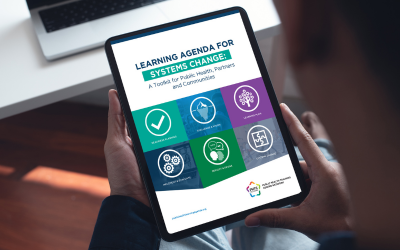
This one-hour webinar offers a deep dive into the Learning Agenda for Systems Change (LASC) framework. Attendees will gain a comprehensive overview of the framework’s phases and components, and learn how it can be applied to support workforce development planning and systems change efforts.

The Learning Agenda for Systems Change (LASC) offers a practical framework for reimagining workforce development, providing an action-oriented, iterative process to use transformative learning as a driver for lasting change. This is important because it’s not just about making changes in how we think, but in how we think together. To really change systems, we need to learn and share ideas in a way that connects us socially.

The LASC supports teams in collaboratively identifying the root causes of complex challenges and developing a multi-level, multi-pronged learning approach to address the conditions needed for systems change.

Whether you’re just learning about systems change or are an experienced systems change leader, the LASC Toolkit 2.0 provides a process, tools, and resources to help guide your thinking. If you’re ready to learn more about how the Learning Agenda for Systems Change can be used in your workforce development planning efforts, we hope you’ll join us!

To download your copy of the Learning Agenda Toolkit 2.0, please go to www.publichealthlearningagenda.org.

Learning Objectives: By the end of this webinar, participants will be able to: By the end of the webinar, attendees will be able to:

  • Explain the context and rationale for the Learning Agenda for Systems Change.
  • Recognize the Learning Agenda for Systems Change framework.
  • List potential applications for the Learning Agenda for Systems Change.

CERTIFICATE:  The course contains two modules: a module to access the webinar and an evaluation module. After accessing both modules, learners will earn a certificate of completion. When the certificate is available, learners will see a Certificate button on their dashboard.

This work is supported by funds made available from the Centers for Disease Control and Prevention (CDC) of the U.S. Department of Health and Human Services (HHS), National Center for STLT Public Health Infrastructure and Workforce, through OE22-2203: Strengthening U.S. Public Health Infrastructure, Workforce, and Data Systems grant. The contents are those of the author(s) and do not necessarily represent the official views of, nor an endorsement, by CDC/HHS, or the U.S. Government.

ACCESS TRAINING

Search the Training Catalog

  • Competencies/Strategic Skills

  • Priority Topics

  • Settings

  • Training Format

  • Sponsor

  • Training Year

  • Reset Filters
Hosting Future Public Health Leaders: The Why and How of Investing in Students

Hosting Future Public Health Leaders: The Why and How of Investing in Students

by R-IV PHTC | Sep 4, 2025 | Featured Training, Training

Elderly couple talking with a social worker

Hosting Future Public Health Leaders: The Why and How of Investing in Students

Year:  2025  |  Competency/Strategic Skill: Leadership and Systems Thinking; Public Health Fundamentals  |  Priority Topic: N/A  |  Setting:  Online  |  Format:  On-Demand  |  Sponsor:  Emory University/Central Office

access training

Overview:

This is a 90-minute recording of a live webinar on October 7, 2025, from 12:00 pm-1:30 pm ET.  

Have you ever thought about the impact you could make by mentoring a student, even if your organization has not hosted interns before? This session, Hosting Future Public Health Leaders: The Why and How of Investing in Students, will explore why investing in students matters for the future of every profession and how you can create positive, practical learning experiences. You will gain insights on how to set clear expectations, communicate effectively, and support learners while also strengthening your own organization. Whether you work in public health, education, government, or a community-based organization, this webinar will leave you with strategies and inspiration to nurture the next generation of leaders. 

Janie Cambron, RS, MPH, DrPHc, has more than 20 years of experience in public health practice and academia. She serves as the inaugural Director of Land Grant Engagement in the University of Kentucky College of Public Health, advancing the land-grant mission by fostering reciprocal partnerships with Cooperative Extension, the Martin-Gatton College of Agriculture, Food and Environment, community organizations, state and local public health agencies, and professional associations. Her work emphasizes building sustainable collaborations that strengthen communities, advance experiential learning, and support the development of future leaders. 

In March 2020, Cambron was one of eight national scholars accepted into the Bloomberg Fellowship DrPH program at Johns Hopkins University. Previously, she was Associate Dean for Practice and Workforce Development at UK, serving as Principal Investigator on multiple workforce development initiatives, including the HRSA Public Health Scholarship Program, with a focus on aligning academic training with public health practice needs and investing in the growth of others. Cambron also spent over a decade at the Kentucky Department for Public Health, where she co-led the effort to achieve the agency’s first national public health accreditation and held leadership roles in quality improvement, program management, epidemiology, and environmental health. A Kentucky Public Health Leadership Institute scholar, trainer, and mentor, Cambron has also served as an instructor for the Community Leadership Institute of Kentucky (CLIK).  

She maintains professional credentialing as a Registered Sanitarian (RS) and is deeply committed to service, experiential learning, and cultivating the next generation of health professionals through innovation, mentorship, and leadership. 


Learning Objectives: By the end of this webinar, participants will be able to:

  • Explain the value of mentoring and hosting students as a strategy to strengthen the future workforce in any field.
  • Identify effective practices for onboarding, setting expectations, and supporting students with diverse backgrounds and needs.
  • Develop approaches to create meaningful, mutually beneficial learning experiences that foster growth for both students and hosts.

    CERTIFICATE: The course contains three modules: a module for pre-session questions, a module to access the webinar, and an evaluation module. After accessing these modules, learners will earn a certificate of completion.

    This project is supported by the Health Resources and Services Administration (HRSA) of the U.S. Department of Health and Human Services (HHS) under grant number UB6HP31680, Public Health Training Centers for $4,348,992. This information or content and conclusions are those of the author and should not be construed as the official position or policy of, nor should any endorsements be inferred by HRSA, HHS or the U.S. Government.
    access training

    Search the Training Catalog

    • Competencies/Strategic Skills

    • Priority Topics

    • Settings

    • Training Format

    • Sponsor

    • Training Year

    • Reset Filters

    Frontline Fatigue: Addressing Trauma and Burnout for Public Health Professionals

    Frontline Fatigue: Addressing Trauma and Burnout for Public Health Professionals

    by R-IV PHTC | Aug 4, 2025 | Featured Training, Training

    Elderly couple talking with a social worker

    Frontline Fatigue: Addressing Trauma and Burnout for Public Health Professionals

    Year:  2025  |  Competency/Strategic Skill: Change Management; Leadership and Systems Thinking; Public Health Fundamentals  |  Priority Topic: Mental Health  |  Setting:  Online  |  Format:  On-Demand  |  Sponsor:  Emory University/Central Office; James and Jennifer Harrell Center for the Study of Family Violence at the University of South Florida College of Public Health

    access training

    Overview:

    This is a 90-minute recording of a live webinar on September 17, 2025. 

    Public health professionals are often the invisible responders during times of crisis, chronic community trauma, and systemic differences. While serving others, many are experiencing unprecedented levels of fatigue, moral distress, secondary trauma, and burnout — often without the space or support to process it. 

    This webinar, hosted by the Region IV Public Health Training Center in collaboration with the James and Jennifer Harrell Center for the Study of Family Violence at the University of South Florida College of Public Health, offers a trauma-informed and systems-oriented approach to understanding and addressing occupational stress in the public health workforce. Participants will explore how individual experiences of burnout are often shaped by broader organizational and societal structures — and will walk away with practical tools to promote wellbeing and resilience at both the personal and institutional levels. 

    Whether you’re new to the field or a seasoned practitioner, this session aims to validate, resource, and restore those working at the intersection of care, fairness, and public health.

    Abraham Salinas, MD, PhD, MPH, MACE, CDVS, is a Research Assistant Professor at the University of South Florida, College of Public Health in Tampa, Florida. Dr. Salinas serves as the Director for the James and Jennifer Harrell Center for the Study of Family Violence and is the Assistant Director for the Center of Excellence in Maternal Child Health at the College of Public Health. Dr. Salinas brings an interdisciplinary background in violence prevention, adverse child experiences, maternal child health epidemiology, public health, medicine, (pediatrics), and community-based participatory research studies. He is a Certified Domestic Violence Specialist and a Certified Trauma-Informed Care Coach. He oversees various research studies as principal investigator and contributes to scientific, technical, and programmatic activities in addition to serving as a subject matter expert on community-based research, dating violence, and trauma-informed research.

    Christiana (“Chrissy”) Zimmer, MPH, CPH, is a passionate public health professional specializing in disability/accessibility, violence prevention, trauma, and public health policy and practice. Chrissy received her Master of Public Health (MPH) degree from the University of South Florida, College of Public Health, and holds the national Certification in Public Health (CPH).  Chrissy has worked on various projects related to research, program planning, and evaluation. With a background in academic ghost writing, Chrissy uses her writing skills, love for strategic planning, and systems thinking as her professional foundation to improve public health programs. Chrissy has had the honor of serving as the Training and Community Outreach Coordinator at the James & Jennifer Harrell Center for the Study of Family Violence since 2022.

    Learning Objectives: By the end of this webinar, participants will be able to:

    • Differentiate between burnout, compassion fatigue, secondary traumatic stress, and moral distress in public health settings.
    • Identify individual and organizational signs of chronic stress and trauma exposure.
    • Explore the systemic and structural contributors to workforce burnout in public health.
    • Apply trauma-informed, resilience-oriented strategies to support wellbeing for themselves and their teams.
    • Describe practical ways organizations can foster a culture of psychological safety, peer support, and collective care.

      CERTIFICATE: The course contains two modules: a module to access the webinar and an evaluation module. After accessing these modules, learners will earn a certificate of completion.

      This project is supported by the Health Resources and Services Administration (HRSA) of the U.S. Department of Health and Human Services (HHS) under grant number UB6HP31680, Public Health Training Centers for $4,348,992. This information or content and conclusions are those of the author and should not be construed as the official position or policy of, nor should any endorsements be inferred by HRSA, HHS or the U.S. Government.

      access training

      Search the Training Catalog

      • Competencies/Strategic Skills

      • Priority Topics

      • Settings

      • Training Format

      • Sponsor

      • Training Year

      • Reset Filters

      Data-Driven Leadership Podcast Series

      Data-Driven Leadership Podcast Series

      by R-IV PHTC | Jul 1, 2025 | Featured Training, Podcast, Training

      Data-Driven Leadership Podcast Series

      Year:  2025  |  Competency/Strategic Skill:  Leadership and Systems Thinking |  Priority Topic:  N/A  |  Setting:  Online  |  Format:  On-demand  |  Sponsor:  Emory University/Central Office; Injury Prevention Research Center at Emory (IPRCE); Safe States Alliance

      Overview:

      This is the third series in our Leading Public Health podcast, with episodes available on Spotify and Apple Podcasts.

      In the Data-Driven Leadership Journey Series, we feature pre-recorded sessions from a Project ECHO initiative, brought to you by the Region IV Public Health Training Center, the Injury Prevention Research Center at Emory (IPRCE), and Safe States Alliance.

      Episode 1: Foundations of Impactful Evaluation (available now) Download Transcript

      Episode 2: Developing and Nurturing Partnerships (available now) Download Transcript

      Episode 3: Baseline Assessments (available now) Download Transcript

      Episode 4: Designing the Evaluation (available now) Download Transcript

      Episode 5: Qualitative Methods to Strengthen Evaluation (available now) Download Transcript

      Episode 6: Quantitative Methods & Analysis (available now) Download Transcript

      Episode 7: Communicating Results (available now) Download Transcript


      listen on spotify
      listen on apple

      Search the Training Catalog

      • Competencies/Strategic Skills

      • Priority Topics

      • Settings

      • Training Format

      • Sponsor

      • Training Year

      • Reset Filters

      Leading Across Generations: Fostering Collaboration and Connection in Public Health

      Leading Across Generations: Fostering Collaboration and Connection in Public Health

      by R-IV PHTC | May 20, 2025 | Featured Training, Training

      Elderly couple talking with a social worker

      Leading Across Generations: Fostering Collaboration and Connection in Public Health

      Year:  2025  |  Competency/Strategic Skill: Communication; Leadership and Systems Thinking  |  Priority Topic: N/A  |  Setting:  Online  |  Format:  On-Demand  |  Sponsor:  Emory University/Central Office

      Overview:

      This is a 90-minute recording of a live webinar on June 11, 2025.

      An insightful webinar designed to explore generational differences within the public health workforce. This session aims to foster understanding and acceptance, encouraging leaders to champion unique differences and collaboration among all generations represented in their workplace. The content is tailored to spark reflection and conversation, ultimately enhancing leadership development and promoting a cohesive and effective public health environment.

      Nina M. Johnson, EdS, LMSW, APTD has 15 consecutive years of professional experience in learning and talent development for communities, not-for-profit organizations, and government municipalities.  ​​As a skilled communicator, Nina has a history of implementing innovative programs focused on learner needs and performance enhancement.  ​​Utilizing her experience as a social worker, Nina employs exceptional relationship-building skills to connect with communities and clients with honor and respect to design and implement learning and leadership initiatives that are reflective of the needs and capacity of the community. Much of Nina’s work encourages and empowers leaders and potential leaders to access vulnerability, hope, and authenticity as leadership tools.  ​ ​

      As a learning and leadership consultant, Nina develops, delivers, and evaluates leadership development programming and trainings for communities, organizations, and individuals. In addition to establishing transformative learning programs, Nina contributes to organizational cultures by championing initiatives to boost belonging and diversity. ​​In addition to establishing transformative learning programs, Nina contributes to organizational cultures by championing initiatives to boost belonging and diversity.

      Learning Objectives: By the end of this webinar, participants will be able to:

      • Identify insights into the unique characteristics and contributions of different generations within the public health workforce.
      • Recognize effective leadership strategies to promote collaboration and connection among all generations in their workplace.

        CERTIFICATE: The course contains two modules: a module to access the webinar and an evaluation module. After accessing the two modules, learners will earn a certificate of completion. When the certificate is available, learners will see a Certificate button on their dashboard.

        This project is supported by the Health Resources and Services Administration (HRSA) of the U.S. Department of Health and Human Services (HHS) under grant number UB6HP31680, Public Health Training Centers for $4,348,992. This information or content and conclusions are those of the author and should not be construed as the official position or policy of, nor should any endorsements be inferred by HRSA, HHS or the U.S. Government.

        access training

        Search the Training Catalog

        • Competencies/Strategic Skills

        • Priority Topics

        • Settings

        • Training Format

        • Sponsor

        • Training Year

        • Reset Filters

        Empowered Leadership Series

        Empowered Leadership Series

        by R-IV PHTC | May 6, 2025 | Featured Training, Training

        Empowered Leadership Series

        Year:  2025  |  Competency/Strategic Skill:  Communication Skills;  Leadership and Systems Thinking Skills  |  Priority Topic:  N/A  |  Setting:  Online  |  Format:  On-Demand  |  Sponsor:  Emory University/Central Office

        Overview:

        Each webinar recording is 90 minutes in length.

        Empowered Leadership is a 4-part webinar series that is designed to empower leaders in creating thriving workplaces. From prioritizing mental health and fostering trust to supporting employee growth and strengthening team dynamics, each session offers actionable strategies to enhance your effectiveness as a supervisor.

        Webinar 1: Cultivating Wellbeing – Mental Health Strategies for Supervisors — Discover the critical role supervisors play in fostering a workplace that prioritizes mental health. This webinar explores the impact of stress and burnout on staff and supervisors alike, offering practical strategies to promote well-being, normalize conversations about mental health, and create a supportive environment. Learn how modeling self-care and healthy boundaries can positively influence your team while enhancing retention and morale.

        Webinar 2: Growth in Action – Empowering Employee Potential — This webinar focuses on recognizing individual strengths and aspirations, offering tools for career mapping, skill-building, and meaningful stretch assignments. Learn creative ways to invest in your team’s development—even with limited resources—while aligning growth opportunities with organizational goals. Help your employees thrive and contribute to your team’s overall success.

        Webinar 3: Trust at the Core – Bulding Strong Supervisor-Staff Relationships  — Trust is the foundation of any successful supervisory relationship. In this session, we’ll dive into how to establish, maintain, and repair trust to foster open communication and psychological safety. Gain actionable tools for transparent conversations, strategies for addressing mistakes constructively, and tips for giving feedback that strengthens relationships. Build the trust necessary for meaningful connection and long-term team success.

        Webinar 4: Unified Teams – Strengthening Relationships for Workplace Success — Strong team dynamics are key to collaboration, innovation, and morale. This session equips supervisors with strategies to foster connection and resolve conflict within their teams. From facilitating inclusive team meetings to addressing misunderstandings and strengthening group cohesion, you’ll learn how to balance individual needs with collective goals. Discover tools and practices to build a team culture rooted in trust, respect, and belonging.

        Search the Training Catalog

        • Competencies/Strategic Skills

        • Priority Topics

        • Settings

        • Training Format

        • Sponsor

        • Training Year

        • Reset Filters

        Future-Proof Public Health: Learning Agility for Leaders in a Changing World

        Future-Proof Public Health: Learning Agility for Leaders in a Changing World

        by R-IV PHTC | Oct 9, 2024 | Featured Training, Training

        Elderly couple talking with a social worker

        Future-Proof Public Health: Learning Agility for Leaders in a Changing World

        Year:  2024  |  Competency/Strategic Skill: Leadership and Systems Thinking  |  Priority Topic: N/A |  Setting:  Online  |  Format:  On-Demand  |  Sponsor:  Emory University/Central Office

        Overview:

        This is a 90-minute recording of a live webinar on November 6, 2024.

        In today’s unpredictable public health environment, agility is a critical trait for leaders to thrive. Learning agility means adapting swiftly in ambiguous situations, applying past lessons to new challenges, and embracing curiosity. Agile leaders don’t rely on conventional solutions but continuously seek improvement and innovation. While agility is partly an inherent trait, it can be developed over time. Though more difficult to cultivate than skills like communication, leaders can enhance their agility through continuous learning and open-mindedness. In this rapidly changing landscape, learning agility is the cornerstone of future-proof leadership in public health.

        Kirsten Rodgers, EdD, MSPH, MCHES®, is a dynamic leader with over twenty years of experience fostering a culture of continuous learning across public health agencies, nonprofit healthcare entities, and professional associations. As President of Proximate Learning, a national consulting firm, Kirsten leads a network of highly skilled consultants dedicated to developing innovative learning and leadership development experiences for small businesses, nonprofits, regional healthcare systems, and federal health agencies, including CDC and NIH.

        Inspired by her study of learning agility at Teachers College, Columbia University, Kirsten has focused on building her leadership skills and coaching others to enhance their abilities through continuous learning and adaptability. She has developed and scaled innovative educational programs for global health organizations, impacting over 500,000 public health professionals worldwide. She has played a critical role in accreditation efforts for training programs across numerous Health and Human Services (HHS) branches.

        With expertise in adult learning, strategic planning, and health education, Kirsten is passionate about building the capacity of leaders to adapt and innovate in rapidly changing environments. She holds an Ed.D. in Health Education from Columbia University and an M.S.P.H. from the University of South Carolina. She has served as an Adjunct Faculty member at institutions including Emory University, University of North Texas, and University of North Carolina Wilmington. Through her work at Proximate Learning, Kirsten and her team navigate federal funding processes, forge strategic relationships, and plan, implement, and evaluate impactful learning and leadership initiatives.

        Learning Objectives: By the end of this webinar, participants will be able to:

        • Articulate how learning agility contributes to driving innovation in public health.
        • Identify at least two new strategies to enhance learning agility.
        • Discuss at least one learning agility practice to incorporate daily for leadership development.

          CERTIFICATE:  The course contains two modules: a module to access the webinar and an evaluation module. After accessing the two modules, learners will earn a certificate of completion. When the certificate is available, learners will see a Certificate button on their dashboard.

          This project is supported by the Health Resources and Services Administration (HRSA) of the U.S. Department of Health and Human Services (HHS) under grant number UB6HP31680, Public Health Training Centers for $4,348,992. This information or content and conclusions are those of the author and should not be construed as the official position or policy of, nor should any endorsements be inferred by HRSA, HHS or the U.S. Government.
          access training

          Search the Training Catalog

          • Competencies/Strategic Skills

          • Priority Topics

          • Settings

          • Training Format

          • Sponsor

          • Training Year

          • Reset Filters

          Data-Driven Leadership Podcast Series

          Leadership Journey Podcast Series

          by R-IV PHTC | Oct 2, 2024 | Featured Training, Podcast, Training

          Leadership Journey Podcast Series

          Year:  2024  |  Competency/Strategic Skill:  Leadership and Systems Thinking |  Priority Topic:  N/A  |  Setting:  Online  |  Format:  On-demand  |  Sponsor:  Emory University/Central Office

          Overview:

          This is the second series offered as part of our Leading Public Health podcast with episodes available on Spotify and Apple Podcasts.

          In the Leadership Journey Series we focus on the journey of leadership and how to recognize your strengths to better understand your purpose as a leader.

          Episode 1: Building a Public Health Career with Moose Alperin (available now) Download Transcript

          Episode 2: Professional Networking with Samantha Cinnick (available now) Download Transcript

          Episode 3: Early Career Development with Nellie Garlow (available now) Download Transcript

          Episode 4: Mentorship with Nina Johnson (available now) Download Transcript

          Episode 5: Unlocking Your Leadership Potential – Part 1 with Emily Saunders (available now) Download Transcript

          Episode 6: Unlocking Your Leadership Potential – Part 2 with Emily Saunders (available now) Download Transcript


          listen on spotify
          listen on apple

          Search the Training Catalog

          • Competencies/Strategic Skills

          • Priority Topics

          • Settings

          • Training Format

          • Sponsor

          • Training Year

          • Reset Filters

          Emergent Leadership for our Times: A Life-Affirming Approach to Collaborative Leadership

          Emergent Leadership for our Times: A Life-Affirming Approach to Collaborative Leadership

          by R-IV PHTC | May 8, 2024 | Featured Training, Training

          Where the Sidewalk Ends

          Emergent Leadership for our Times: A Life-Affirming Approach to Collaborative Leadership

          Year:  2024  |  Competency/Strategic Skill: Leadership and Systems Thinking  |  Priority Topic: N/A |  Setting:  Online  |  Format:  On-Demand  |  Sponsor:  Emory University/Central Office

          Overview:

          This is a recording of a 90-minute webinar held on June 20, 2024

          This session will introduce the participant to regenerative leadership (RL)- a positive, strength-based, relational, and adaptive approach to leading in complex times. The webinar will focus first on the concept of “leading with your whole self” and then define the RL approach to collaborating in complex contexts.  The webinar will introduce the key mindset shifts required to develop your RL capabilities as well as specific skills required for more effective, collaborative leadership in volatile, uncertain, complex, and ambiguous (VUCA) times. 

          Dr. Marissa Levine is Professor of Public Health Practice at the University of South Florida (USF) College of Public Health (COPH) and collaborating faculty to the Department of Family Medicine and the Division of Infectious Diseases at the USF Morsani College of Medicine in Tampa, Florida. Her primary focus is on leadership for population health improvement. Dr. Levine directs the USF Center for Leadership in Public Health Practice at COPH where she teaches a positive, strength-based, systems thinking approach to leading in complex contexts, called regenerative leadership.

          Dr. Levine is a retired family physician with 16 years of medical practice experience including as residency director for a family medicine residency. She subsequently completed 16 years of state government service culminating in being appointed as the Virginia State Health Commissioner and agency head for the Virginia Department of Health (VDH) from 2014-2018. As Commissioner, Dr. Levine led the effort to create an action framework for population health improvement called Virginia’s Plan for Well-Being and led significant public health emergency preparedness and response activities as the state ESF-8 lead.

          Learning Objectives: By the end of this webinar, participants will be able to:

          • Describe regenerative leadership.
          • Define the mindset, skillset and “netset” required to develop regenerative leadership.
          • Identify key resources to continue their regenerative leadership development.
          • Commit to one aspect of regenerative leadership that they would be willing to incorporate into their day-to-day leadership behaviors.

            CERTIFICATE: The course contains two modules: a module to access the webinar and an evaluation module. After accessing both modules, learners will earn a certificate of completion.

            This project is supported by the Health Resources and Services Administration (HRSA) of the U.S. Department of Health and Human Services (HHS) under grant number UB6HP31680, Public Health Training Centers for $4,348,992. This information or content and conclusions are those of the author and should not be construed as the official position or policy of, nor should any endorsements be inferred by HRSA, HHS or the U.S. Government.
            access training

            Search the Training Catalog

            • Competencies/Strategic Skills

            • Priority Topics

            • Settings

            • Training Format

            • Sponsor

            • Training Year

            • Reset Filters

            Fighting for Public Health: How Do We Strengthen Public Health Advocacy at Local, State, and National Levels?

            Fighting for Public Health: How Do We Strengthen Public Health Advocacy at Local, State, and National Levels?

            by R-IV PHTC | Jan 9, 2024 | Featured Training, Training

            Where the Sidewalk Ends

            Fighting for Public Health: How Do We Strengthen Public Health Advocacy at Local, State, and National Levels?

            Year:  2024|  Competency/Strategic Skill: Policy Development/Program Planning Skills; Leadership and Systems Thinking  |  Priority Topic: N/A |  Setting:  Online  |  Format:  On-Demand  |  Sponsor:  Emory University/Central Office

            Overview:

            This is a recording of a live webinar on January 22, 2024. 

            The politicization of widely accepted practices like vaccinations and the declaration of public health emergencies is directly impacting public health’s ability to protect and promote healthy communities. The decline in trust and investment in public health has raised the question:  How can we strengthen public health advocacy at local, state, and national levels? In a feasibility study conducted by the Network for Public Health Law, public health advocates and leaders from 45 organizations were asked this very question. Their responses provide a snapshot of the current state of public health and highlight opportunities to amplify the voice of public health and our partners in advocating for evidence-based policies and approaches.  Join us in this webinar to learn more about the findings from this study and the opportunities to work together to support the profession and practice of public health.  Participants will also learn how to build skills to better communicate public health to all in their community and the resources available to support this critical advocacy work.

            After working in the fields of public health, evaluation & research, and philanthropy for over a decade, Maddie Frey started Frey Evaluation, LLC, a public health evaluation firm in 2018 to provide consulting services for organizational learning, evaluative thinking & tools, and movement toward systems change. Maddie’s previous work includes Cottage Health Hospital Director of Population Health Evaluation (Santa Barbara, CA), Healthcare Georgia Foundation’s Director of Evaluation (Atlanta, GA), Center for Community Health & Evaluation (Seattle, WA), and Georgia State University SPH Adjunct Faculty. Ms. Frey has an MPH from the University of Washington’s community-oriented public health practice program, and a BA in anthropology from Smith College. As an athlete and organizer, Maddie co-founded, led or coached the following organizations: Georgia Tech Wreck, Atlanta Women’s Ultimate, Atlanta Outbreak, Atlanta Soul, the Premier Ultimate League, and the Premier Ultimate League Foundation.

            Iyanrick John serves as Vice President of External Affairs for ChangeLab Solutions. In this role, he is responsible for assisting with development and execution of the organization’s policy strategy, building and cultivating relationships with partners, and elevating the organization’s national profile. Prior to joining ChangeLab Solutions, Iyan served as a Senior Policy Strategist for the Asian & Pacific Islander American Health Forum (APIAHF), where he assisted with policy and advocacy efforts to expand access to health care, improve health care quality, and further the collection and reporting of data for communities to address health inequities. He was also a lecturer at the California State University, East Bay Department of Public Health and worked as a Policy Analyst for the Office of Minority Health and Health Disparities at the Maryland Department of Health. Iyan has an MPH in Epidemiology from Loma Linda University and a JD from the University of Maryland School of Law. ​ ​

            Learning Objectives: By the end of this webinar, participants will be able to:

            • Describe at least 2 tensions that study participants identified as needing to be voiced and acknowledged to strengthen advocacy.
            • List the 6 opportunities to strengthen advocacy identified through the study and corresponding ideas about how to seize on those opportunities.
            • Locate resources to improve communication and advocacy skills of public health and health-related workforces.

              CERTIFICATE: The course contains two modules: a module to access the webinar and an evaluation module. After accessing both modules, learners will earn a certificate of completion.

              This project is supported by the Health Resources and Services Administration (HRSA) of the U.S. Department of Health and Human Services (HHS) under grant number UB6HP31680, Public Health Training Centers for $4,348,992. This information or content and conclusions are those of the author and should not be construed as the official position or policy of, nor should any endorsements be inferred by HRSA, HHS or the U.S. Government.

              access training

              Search the Training Catalog

              • Competencies/Strategic Skills

              • Priority Topics

              • Settings

              • Training Format

              • Sponsor

              • Training Year

              • Reset Filters

              The Emotionally Intelligent Leader:  A Critical Role in Improving the Work Environment

              The Emotionally Intelligent Leader: A Critical Role in Improving the Work Environment

              by R-IV PHTC | Jan 5, 2024 | Featured Training, Training

              Where the Sidewalk Ends

              The Emotionally Intelligent Leader: A Critical Role in Improving the Work Environment

              Year:  2024|  Competency/Strategic Skill:  Leadership and Systems Thinking  |  Priority Topic: N/A |  Setting:  Online  |  Format:  On-Demand  |  Sponsor:  Emory University/Central Office

              Overview:

              This is a recording of a live webinar on January 26, 2024.

              An emotionally intelligent leader is aware of their thoughts and behaviors and how the two impact the individuals and teams they lead. The result, more productive and collaborative teams who communicate effectively. The Emotionally Intelligent Leader webinar will dispel myths about emotions’ place in the work environments and provide a foundational understanding of emotional intelligence to include an introduction to a theoretical model that guides individual and social behaviors. Participants will complete this webinar with skills and strategies to elevate their emotional intelligence for their personal and team’s success. 

              Nina M. Johnson, EdS, LMSW, APTD, has 15 consecutive years of professional experience in learning and talent development for communities, not-for-profit organizations, and government municipality.  ​​As a skilled communicator, Nina has a history of implementing innovative programs focused on learner needs and performance enhancement.  ​​Utilizing her experience as a social worker, Nina employs exceptional relationship-building skills to connect with communities and clients with honor and respect to design and implement learning and leadership initiatives that are reflective of the needs and capacity of the community. Much of Nina’s work encourages and empowers leaders and potential leaders to access vulnerability, hope, and authenticity as leadership tools.  ​ ​As a learning and leadership consultant, Nina develops, delivers, and evaluates leadership development programming and trainings for communities, organizations, and individuals. In addition to establishing transformative learning programs, Nina contributes to organizational cultures by championing initiatives to boost belonging and diversity. ​​In addition to establishing transformative learning programs, Nina contributes to organizational cultures by championing initiatives to boost belonging and diversity. ​

              Learning Objectives: By the end of this webinar, participants will be able to:

              • Define emotional intelligence
              • Explain how emotionally intelligent leaders can improve the work environment and team performance
              • Identify specific strategies to elevate their emotional intelligence

                CERTIFICATE: The course contains two modules: a module to access the webinar and an evaluation module. After accessing both modules, learners will earn a certificate of completion.

                This project is supported by the Health Resources and Services Administration (HRSA) of the U.S. Department of Health and Human Services (HHS) under grant number UB6HP31680, Public Health Training Centers for $4,348,992. This information or content and conclusions are those of the author and should not be construed as the official position or policy of, nor should any endorsements be inferred by HRSA, HHS or the U.S. Government.
                access training

                Search the Training Catalog

                • Competencies/Strategic Skills

                • Priority Topics

                • Settings

                • Training Format

                • Sponsor

                • Training Year

                • Reset Filters

                Foundations of Health Communication

                Foundations of Health Communication

                by R-IV PHTC | Nov 30, 2023 | Featured Training, Training

                Foundations of Health Communication

                Year:  2023  |  Competency/Strategic Skill:  Leadership and Systems Thinking; Communication |  Priority Topic:  N/A  |  Setting:  Online  |  Format:  On-demand  |  Sponsor:  Emory University/Central Office

                Overview:

                This is a self-paced course series.

                Foundations of Health Communication is a series of self-paced, on-demand courses that address the need for communication training. Effective communication skills are essential to the public health workforce’s efforts to collaborate with partners and teams, educate policymakers, convey messages during an emergency, or take action in other ways as we work to build healthier communities.

                Course 1: Communicating Clearly: The Importance of Plain Language – designed to help the workforce learn about the basic principles of plain language, understand the benefits of clearer communication in all their work, and how to apply the principles to content ranging from educational materials to social media posts.

                Course 2: Improving Health Literacy for All – provides an overview of health literacy from the individual and organizational levels and introduces some techniques and tools to improve health literacy.

                Course 3: Understanding and Tackling Misinformation and Disinformation – introduces misinformation, disinformation, and malinformation (MDM) and explores its origins, how it spreads, the harm it can cause, and how to prevent and manage it.

                Course 4: Introduction to Using Social Media – provides an overview of how and why organizations should use social media to advance their public health goals.

                Course 5: Audience Segmentation: A Critical Skill in Planning Public Health Communication – provides an overview of audience segmentation and explains how it helps with the development of targeted messages.  


                Search the Training Catalog

                • Competencies/Strategic Skills

                • Priority Topics

                • Settings

                • Training Format

                • Sponsor

                • Training Year

                • Reset Filters

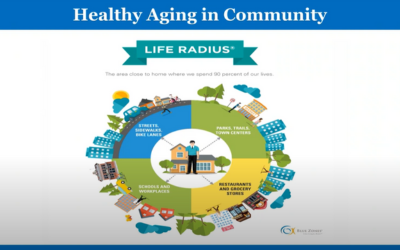
                Leveraging Community Health Improvement Planning to Promote Healthy Aging

                Leveraging Community Health Improvement Planning to Promote Healthy Aging

                by R-IV PHTC | Nov 28, 2023 | Training

                Healthy Aging

                Leveraging Community Health Improvement Planning to Promote Healthy Aging

                Year:  2023 |  Competency/Strategic Skill:  Leadership and Systems Thinking Skills; Public Health Fundamentals|  Priority Topic:  N/A  |  Setting:  Online  |  Format:  On-Demand |  Sponsor:  University of South Florida College of Public Health’s Center for Leadership in Public Health Practice

                In Overview:

                This is a recording of a live webinar held on October 18, 2023

                This training presented by Dr. Kathy Black aims to increase the capacity of local health departments, health care organizations and allied health and social service providers to conduct community health assessment and improvement practice to promote healthy aging for older adults and broader population aging.

                This training is sponsored by the University of South Florida College of Public Health’s Center for Leadership in Public Health Practice, the Florida Community Based Training partner of the Region IV Public Health Training Center based at Emory University.

                Access Training

                Search the Training Catalog

                • Competencies/Strategic Skills

                • Priority Topics

                • Settings

                • Training Format

                • Sponsor

                • Training Year

                • Reset Filters

                Public Health Care Management

                Public Health Care Management

                by R-IV PHTC | Oct 4, 2023 | Training

                Healthy Aging

                Public Health Care Management

                Year:  2023 |  Competency/Strategic Skill:  Leadership and Systems Thinking Skills; Public Health Fundamentals|  Priority Topic:  N/A  |  Setting:  Online  |  Format:  On-Demand |  Sponsor:  University of South Florida College of Public Health’s Center for Leadership in Public Health Practice

                In Overview:

                This is a recording of a live webinar held on August 17, 2023

                In this training, Dr. Zachary Pruitt covers the role of the manager in public health organizations. Three prominent perspectives on the essential functions of the manager in all settings will be discussed, including Systems Thinking, Five Basic Functions of the Manager, and Manager as Leader. This session will also describe how health care management is different than management in other sectors, including the health care manager’s role on the interprofessional team. Finally, this session will review the skills necessary for managers to lead public health organizations.

                This training is sponsored by the University of South Florida College of Public Health’s Center for Leadership in Public Health Practice, the Florida Community Based Training partner of the Region IV Public Health Training Center based at Emory University.

                Access Training

                Search the Training Catalog

                • Competencies/Strategic Skills

                • Priority Topics

                • Settings

                • Training Format

                • Sponsor

                • Training Year

                • Reset Filters
                Pandemics, Infodemics and Information Overload: How Consistent, Clear Communication Can Help in Future Outbreaks

                Pandemics, Infodemics and Information Overload: How Consistent, Clear Communication Can Help in Future Outbreaks

                by R-IV PHTC | Oct 3, 2023 | Training

                Where the Sidewalk Ends

                Pandemics, Infodemics and Information Overload: How Consistent, Clear Communication Can Help in Future Outbreaks

                Year:  2023 |  Competency/Strategic Skill:  Communication; Problem Solving; Leadership and Systems Thinking  |  Priority Topic: Other Infectious Diseases |  Setting:  Online  |  Format:  On-Demand  |  Sponsor:  Emory University/Central Office; University of Alabama at Birmingham

                he Overview:

                This is a recording of a webinar held on November 7, 2023.

                In this webinar, Dr. Wallace, Epidemiologist and Adjunct Assistant Professor of Epidemiology at the University of Illinois at Chicago, School of Public Health, will discuss infodemics and how they occur, talk through misinformation vs. correct information and how they both can contribute to infodemics and will review the problem of infodemics and how we can reduce information overload and confusion by prioritizing consistent and clear scientific communication to mitigate public confusion and information fatigue. This webinar is presented by the Alabama Regional Center for Infection Prevention and Control and cosponsored by the Region IV Public Health Training Center.

                Dr. Katrine Wallace holds a Ph.D. in Epidemiology and has 15+ years of professional research experience in epidemiology, research design, pharmacoepidemiology, health economics, outcomes research, and biostatistics. She is currently an epidemiologist and adjunct assistant professor of epidemiology at the University of Illinois at Chicago, School of Public Health. She is also known as “Dr. Kat” on her popular social media channels, where she educates on epidemiology, vaccines, and the COVID-19 pandemic. She has been an invited speaker in the US and internationally and has presented research at over 20 scientific congresses. A vaccine advocate, she serves as a member of “Team Halo” (United Nations Verified Initiative), Project FIDES (World Health Organization) and was chosen as a “vaccine luminary” for the 2021 G7 Vaccine Confidence Summit. Dr. Wallace has also been featured as an opinion contributor for The Hill, and has been interviewed or profiled in several mainstream media outlets such as; BBC World News, The  Washington Post, Good Morning America, Bloomberg, CBS News, and National Public Radio.

                This webinar is presented by the Alabama Regional Center for Infection Prevention and Control Training and Technical Assistance and cosponsored by the Region IV Public Health Training Center.

                access training

                Search the Training Catalog

                • Competencies/Strategic Skills

                • Priority Topics

                • Settings

                • Training Format

                • Sponsor

                • Training Year

                • Reset Filters
                It Takes a Village: Building Community-Based Partnerships Across Sectors

                It Takes a Village: Building Community-Based Partnerships Across Sectors

                by R-IV PHTC | Oct 3, 2023 | Training

                Where the Sidewalk Ends

                It Takes a Village: Building Community-Based Partnerships Across Sectors

                Year:  2023 |  Competency/Strategic Skill:  Leadership and Systems Thinking  |  Priority Topic: Community and Partner Engagement; Leadership and Systems Thinking |  Setting:  Online  |  Format:  On-Demand  |  Sponsor:  Emory University/Central Office

                he Overview:

                This is a recording of a live webinar on November 1, 2023.

                The Department of Transportation’s National Highway Traffic Safety Administration (NHTSA) is implementing new traffic safety policies that highlight equity through the National Road Safety Strategy and Safe System Approach. But keeping the public safe and healthy requires coordination and collaboration across multiple sectors. The Department of Public Health and the Department of Transportation have successfully worked together to build community partnerships to address health equity and improve road safety. This webinar will review these programs and policies and highlight specific examples from the field to learn how public health agencies in Alabama and Georgia are successfully reaching underserved and at-risk communities through evidence-based traffic safety programming.

                Rita Hill is a Stakeholder Engagement Specialist with NHTSA. She supports stakeholder expansion and community engagement initiatives throughout the country. She has a background in international development and public health and is driven by the belief that prioritizing safety and accessibility for the most marginalized benefits everyone.

                Erin Sterling is a Program Analyst and Stakeholder Engagement Specialist with NHTSA. She has experience working directly with the community at the YWCA in Manchester, NH, as well as with the Commonwealth of Massachusetts Office of Grants and Research, where she managed a myriad of Department of Justice Grants, including the Edward Byrne Memorial Justice Assistance Grant, and the Violence Against Women Act. Erin holds a BA in Criminal Justice from Saint Anselm College and an MA in Public Administration from the University of New Hampshire.

                Amanda Jackson is Alabama’s Regional Program Manager for NHTSA. She previously worked as a Grant Planner for the Georgia Governor’s Office of Highway Safety and was the Atlanta Regional Coordinator for the Georgia Department of Public Health’s Child Occupant Safety Project. Amanda has a Master of Public Health in Health Behavior from the University of Alabama at Birmingham and a Bachelor of Science in Health Promotion from the University of Georgia.

                She has also invited several state-level partners to share their experiences, including:

                Lynne Wilman, Unit Chief, Law Enforcement and Traffic Safety Division of Alabama Department of Economic and Community Affairs

                Denise Bertaut, State Coordinator, Child Passenger Safety, Alabama Department of Public Health

                Lisa Dawson, Director, Injury Prevention Program, Georgia Department of Public Health


                Learning Objectives: By the end of this webinar, participants will be able to:

                • Discuss how cross-sector collaborations can improve public health efforts
                • Identify at least 2 local best practices for public health activities using NHTSA funding
                • Explain how NHTSA is using a health equity focus to improve road safety
                • Describe how NHTSA is supporting community engagement with underrepresented communities and communities overrepresented in crashes

                  CERTIFICATE:  The course contains two modules: a module to access the webinar and an evaluation module. After accessing both modules, learners will earn a certificate of completion.

                  This project is supported by the Health Resources and Services Administration (HRSA) of the U.S. Department of Health and Human Services (HHS) under grant number UB6HP31680, Public Health Training Centers for $4,348,992. This information or content and conclusions are those of the author and should not be construed as the official position or policy of, nor should any endorsements be inferred by HRSA, HHS or the U.S. Government.

                  access training

                  Search the Training Catalog

                  • Competencies/Strategic Skills

                  • Priority Topics

                  • Settings

                  • Training Format

                  • Sponsor

                  • Training Year

                  • Reset Filters

                  Working with the News Media: How to Enhance Your Message

                  Working with the News Media: How to Enhance Your Message

                  by R-IV PHTC | Jul 20, 2023 | Featured Training, Training

                  Where the Sidewalk Ends

                  Working with the News Media: How to Enhance Your Message

                  Year:  2023 |  Competency/Strategic Skill:  Communication; Leadership and Systems Thinking  |  Priority Topic: N/A |  Setting:  Online  |  Format:  On-Demand |  Sponsor:  Emory University/Central Office

                  Overview:

                  This is a recording of a live webinar on September 6, 2023. 

                  What do we do when we are asked to talk about a public health issue? How do we ensure that the public trusts what they hear when important information about a public health issue is shared on the news? How do public health professionals demonstrate confidence and competence when called on to share important information? The objective of this webinar is to equip participants with an understanding of how to work with the news media in both a proactive and reactive manner. The course covers the basics of media relations, and provides tips on developing a media strategy, proactively pitching story ideas, interviewing techniques, staying on message, and controlling the communication. 

                  Dr. Cynthia Jorgensen is an Adjunct Professor at Emory University’s Rollins School of Public Health, with joint appointments in the Department of Behavioral, Social and Health Education Sciences and the Executive MPH Program. Dr. Jorgensen recently retired from the U.S Centers for Disease Control and Prevention, where she was the Associate Director for Communication, National Center for Immunization and Respiratory Diseases. In this role, she oversaw the communications efforts for a variety of vaccine-preventable and respiratory diseases and was actively engaged in CDC’s COVID-19 response. While at CDC for more than 30 years, Dr. Jorgensen applied her expertise in behavioral science and health communications to the development and implementation of several award-winning campaigns in hepatitis, cancer, genomics, and HIV/AIDS. Cynthia has held numerous leadership positions, including Chair of CDC’s Behavior and Social Sciences Working Group (BSSWG) and President of the National Society for Public Health Education (SOPHE). Cynthia received her doctoral degree in Health Behavior and Communications from the University of North Carolina at Chapel Hill and her BA/MA in Health Communications from Boston University.

                  Learning Objectives: By the end of this webinar, participants will be able to:

                  • Describe the importance of having a media strategy  
                  • Discuss the differences between a proactive and reactive media relations  
                  • Name four documents that can help control the message when working with the news media  
                  • Apply key media relations principles when responding to a media interview   
                  • Develop compelling sound bites for audio or video interviews 

                    CERTIFICATE:  The course contains two modules: a module to access the webinar plus an additional module for the evaluation and any other resources. After accessing both modules and completing the evaluation link, the course will be marked as complete in Learn Upon. When the course is complete, the certificate will be available for learners to download directly from their course dashboard.

                    access training

                    Search the Training Catalog

                    • Competencies/Strategic Skills

                    • Priority Topics

                    • Settings

                    • Training Format

                    • Sponsor

                    • Training Year

                    • Reset Filters

                    Responding to Risk: Understanding Why We Do What We Do and What to Say When It Really Counts

                    Responding to Risk: Understanding Why We Do What We Do and What to Say When It Really Counts

                    by R-IV PHTC | Jul 19, 2023 | Training

                    Where the Sidewalk Ends

                    Responding to Risk: Understanding Why We Do What We Do and What to Say When It Really Counts

                    Year:  2023 |  Competency/Strategic Skill:  Communication; Leadership and Systems Thinking  |  Priority Topic: N/A |  Setting:  Online  |  Format:  On-Demand|  Sponsor:  Emory University/Central Office

                    Overview:

                    This is a recording of a live webinar on August 16, 2023. 

                    People are predictable. Unfortunately, the world around us rarely is as easy to predict or understand. Public health professionals are called on to respond to scary, unknown, urgent, and important issues every day in big and small ways. Learning strategies for risk communication can make this work a little bit easier and a lot more effective. This webinar introduces basic concepts of risk communication as well as the critical principles of how to communicate during an outbreak, crisis or emergency situation.  This training also provides insights into how and why people respond to risk, and helps participants understand the mental shortcuts that are common responses to hazards, risks, and threats. Practical tips are presented throughout to help participants gain skills in assessing and responding to their individual situations in their communities. 

                    Dr. Cynthia Jorgensen is an Adjunct Professor at Emory University’s Rollins School of Public Health, with joint appointments in the Department of Behavioral, Social and Health Education Sciences and the Executive MPH Program. Dr. Jorgensen recently retired from the U.S Centers for Disease Control and Prevention, where she was the Associate Director for Communication, National Center for Immunization and Respiratory Diseases. In this role, she oversaw the communications efforts for a variety of vaccine-preventable and respiratory diseases and was actively engaged in CDC’s COVID-19 response. While at CDC for more than 30 years, Dr. Jorgensen applied her expertise in behavioral science and health communications to the development and implementation of several award-winning campaigns in hepatitis, cancer, genomics, and HIV/AIDS. Cynthia has held numerous leadership positions, including Chair of CDC’s Behavior and Social Sciences Working Group (BSSWG) and President of the National Society for Public Health Education (SOPHE). Cynthia received her doctoral degree in Health Behavior and Communications from the University of North Carolina at Chapel Hill and her BA/MA in Health Communications from Boston University.

                    Learning Objectives: By the end of this webinar, participants will be able to:

                    • Define risk communication and the nuances when applied to an impending threat, an emergency, a crisis, or emergency crisis   
                    • Explain how perceptions of risk differ among lay vs experts   
                    • List tactics and approaches that are used to communicate about risk  
                    • List at least four mental short cuts that can affect people’s perception of risk  
                    • Describe the importance of timeliness, transparency, and consistency when communicating about threats or hazards  
                    • List the three factors that influence perceptions of trustworthiness  
                    • Understand how to apply the ten principles of risk communication to a selected scenario 

                    CERTIFICATE:  The course contains two modules: a module to access the webinar and an evaluation module. After accessing both modules, learners will earn a certificate of completion. When the certificate is available, learners will see a Certificate button on their dashboard.

                    access training

                    Search the Training Catalog

                    • Competencies/Strategic Skills

                    • Priority Topics

                    • Settings

                    • Training Format

                    • Sponsor

                    • Training Year

                    • Reset Filters

                    Leading in a Virtual Environment: Staying Connected with Your People, Your Work, and Your Mission

                    Leading in a Virtual Environment: Staying Connected with Your People, Your Work, and Your Mission

                    by R-IV PHTC | Jun 20, 2023 | Training

                    Where the Sidewalk Ends

                    Leading in a Virtual Environment: Staying Connected with Your People, Your Work, and Your Mission

                    Year:  2023 |  Competency/Strategic Skill:  Communication; Leadership and Systems Thinking  |  Priority Topic: N/A |  Setting:  Online  |  Format:  On-Demand  |  Sponsor:  Emory University/Central Office

                    Overview:

                    This is a recording of a live webinar held on July 12, 2023, from 12-1:30 pm ET. 

                    The most important aspects of leadership involve how well a leader communicates and connects to their team. Now that the standard workplace environment is online or a hybrid of in-person and online teams, what does leadership look like? And what is required of leaders to meaningfully connect to their team in order to cultivate good communication and engagement—and what do they do when they realize it’s not working? “Virtual Drift” refers to the gradual, unintentional tendency for virtual and hybrid team members to become increasingly disconnected from one another, from the work itself, and from the overall mission of the organization. It is critical for leaders to recognize this tendency, and actively counter that “drift” with intentional opportunities for team members to connect to one another, to the content of the work, and to the mission and meaning of the organization.

                    John Riordan has been committed to challenging people and organizations to reach their full potential for many years – first as co-founder and Director of Cornerstone Leadership Academy for 8 years in Uganda, and for the past 20 years as a Leadership and Organization Development Consultant working with a broad range of Federal, private sector and non-profit organizations. John sees the potential for leadership in every individual and is deeply motivated to support others who want to make the world a better place. He has coached hundreds of leaders from across every sector, challenging them expand their leadership capacity and have greater impact. Over the past 20 years he has conducted hundreds of workshops ranging from large groups (200+) to small teams and is adept at making sure the approach for the work fits well with his client’s style. John received his B.A. in Public Policy from Washington and Lee University (1987), and his M.A. in Educational Management from Makerere University in Kampala, Uganda (1997). He and his wife Margaret, from Sydney, Australia, have four children and reside in Ashburn, Virginia. You can find out more about John and his range of services and online course materials on his website at www.johnriordan.com.

                    Learning Objectives: By the end of this webinar, participants will be able to:

                    • Understand the skills and perspectives leaders need to be successful in a virtual environment
                    • Identify the signs of “virtual drift”
                    • Describe practical strategies for helping your team create and sustain connection with one another, with the work itself, and with the mission of your organization

                    CERTIFICATE:  The course contains two modules: a module to access the webinar and an evaluation module. After accessing both modules, learners will earn a certificate of completion. When the certificate is available, learners will see a Certificate button on their dashboard.

                    access training

                    Search the Training Catalog

                    • Competencies/Strategic Skills

                    • Priority Topics

                    • Settings

                    • Training Format

                    • Sponsor

                    • Training Year

                    • Reset Filters

                    Adaptive Leadership for Public Health Podcast Series

                    Adaptive Leadership for Public Health Podcast Series

                    by R-IV PHTC | Dec 2, 2021 | Featured Training, Podcast, Training

                    Adaptive Leadership for Public Health Podcast Series

                    Year:  2021  |  Competency/Strategic Skill:  Leadership and Systems Thinking |  Priority Topic:  N/A  |  Setting:  Online  |  Format:  On-demand  |  Sponsor:  Emory University/Central Office

                    Overview:

                    This is a podcast series with six episodes offered as part of our Leading Public Health podcast. Each episode is about 20 minutes. New episodes are released monthly.

                    Adaptive Leadership for Public Health is designed to help tier 3 (senior management/executive level) public health professionals address complex challenges by growing and thriving as an adaptive leader.

                    Episode 1: What is Adaptive Leadership? (available now) Download Transcript

                    Episode 2: Leadership Principles and Practices (available now) Download Transcript

                    Episode 3: Cultural Competence (available now) Download Transcript

                    Episode 4: Managing Conflict (available now) Download Transcript

                    Episode 5: Collaborative Leadership (available now) Download Transcript

                    Episode 6: Leading Change (available now) Download Transcript

                    listen to the podcast

                    Search the Training Catalog

                    • Competencies/Strategic Skills

                    • Priority Topics

                    • Settings

                    • Training Format

                    • Sponsor

                    • Training Year

                    • Reset Filters

                    Innovation Approaches to Tackle Public Health and Community Challenges

                    Innovation Approaches to Tackle Public Health and Community Challenges

                    by R-IV PHTC | Nov 15, 2021 | Training

                    Innovation Approaches to Tackle Public Health and Community Challenges

                    Year:  2021/2022  |  Competency/Strategic Skill:  Leadership and Systems Thinking |  Priority Topic: N/A |  Setting:  Online  |  Format:  On-Demand  |  Sponsor:  Emory University/Central Office

                    Overview:

                    This is a three-part webinar series; all parts were recorded. These were interactive webinars in which learners engaged with the instructor and other participants. Learners may choose to register for all webinars in the series or for individual sessions.

                    Systems problems, by definition, are complex and can seem impossible to tackle. However, there are tools and innovative approaches that might help public health professionals and partners make progress on these problems. Join us for a 3-part webinar series to learn tools and approaches for tackling large-scale community challenges, from maternal health to opioid overdoses. In the first webinar, we will cover stakeholder mapping and how understanding the whole ecosystem of players can help you decide who to include in co-creating solutions and what communications approaches to use. The second webinar will cover right-sizing your problem so that you can effectively approach and tackle it. If we don’t break systems problems down into manageable pieces, we often become immobilized by the complexity or risk losing the nuances of the problem. Finally, building off the identified parts of the ecosystem, in the third webinar, we’ll journey map the current, as well as the ideal, situation. From there, we can look at the gaps between the two states and ideate possible solutions.

                    available on-demand—Innovation Approaches to Tackle Public Health and Community Challenges: Stakeholder Mapping
                    AVAILABLE ON-DEMAND—Innovation Approaches to Tackle Public Health and Community Challenges: Right-Sizing Problem Statements
                    Available on-demand—Innovation Approaches to Tackle Public Health and Community Challenges: Journey Mapping

                    Search the Training Catalog

                    • Competencies/Strategic Skills

                    • Priority Topics

                    • Settings

                    • Training Format

                    • Sponsor

                    • Training Year

                    • Reset Filters

                    Purpose Built Communities and the Role of Public Health

                    Purpose Built Communities and the Role of Public Health

                    by R-IV PHTC | Mar 19, 2021 | Training

                    Purpose Built Communities and the Role of Public Health

                    Year:  2021  |  Competency/Strategic Skill:  Leadership and Systems Thinking |  Priority Topic:  N/A  |  Setting:  On-Demand  |  Format:  Live  |  Sponsor:  Emory University/Central Office

                    Overview:

                    This is a 90-minute recording of a webinar held on March 31, 2021.

                    During this webinar, we will discuss the causes and impact of poverty as well as the role of public health in building cross-sectoral partnerships to improve social determinants of health. We will discuss the Purpose Built Community approach to building healthier communities and more equitable neighborhoods and the impact COVID-19 is having on the community development strategies.

                    access training

                    Search the Training Catalog

                    • Competencies/Strategic Skills

                    • Priority Topics

                    • Settings

                    • Training Format

                    • Sponsor

                    • Training Year

                    • Reset Filters

                    One RNA Virus is Enough! HIV Care in the Setting of the COVID Pandemic

                    One RNA Virus is Enough! HIV Care in the Setting of the COVID Pandemic

                    by R-IV PHTC | Jan 12, 2021 | Training

                    One RNA Virus is Enough! HIV Care in the Setting of the COVID Pandemic

                    Year:  2021  |  Competency/Strategic Skill:  Leadership and Systems Thinking |  Priority Topic:  HIV/AIDS  |  Setting:  Online  |  Format:  On-Demand  |  Sponsor:  Emory University/Central Office

                    Overview:

                    This is 90-minute recording of a webinar held on January 21, 2021.

                    During this webinar, we will review how the COVID-19 pandemic has detrimentally affected HIV care and steps that have been taken to mitigate these effects.

                    access training

                    Search the Training Catalog

                    • Competencies/Strategic Skills

                    • Priority Topics

                    • Settings

                    • Training Format

                    • Sponsor

                    • Training Year

                    • Reset Filters

                    Understanding Models to Predict Viral Spread and Community Impact

                    Understanding Models to Predict Viral Spread and Community Impact

                    by R-IV PHTC | May 14, 2020 | Training

                    Understanding Models to Predict Viral Spread and Community Impact

                    Year:  2020  |  Competency/Strategic Skill:  Problem Solving, Leadership and Systems Thinking |  Priority Topic:  Other Infectious Diseases  |  Setting:  Online  |  Format:  On-Demand  |  Sponsor:  Emory University/Central Office

                    Overview:

                    This is a recording of a 90-minute webinar.

                    In this presentation we will discuss how models predict viral spread including the spread of COVID-19 as well as the impact it has on the community. We will review three modeling strategies used to model viral spread and how assumptions in models impact decisions made from various model outputs. We will also explore how models are used in public health policy to control infectious disease spread.

                    access training

                    Search the Training Catalog

                    • Competencies/Strategic Skills

                    • Priority Topics

                    • Settings

                    • Training Format

                    • Sponsor

                    • Training Year

                    • Reset Filters
                    Thriving in an Online Work Environment

                    Thriving in an Online Work Environment

                    by R-IV PHTC | May 5, 2020 | Featured Training, Training

                    Thriving in an Online Work Environment

                    Year:  2020  |  Competency/Strategic Skill:  Leadership and Systems Thinking, Change Management |  Priority Topic:  N/A  |  Setting:  Online  |  Format:  On-demand  |  Sponsor:  Emory University/Central Office

                    Overview:

                    Are you now working remotely? Are you finding it difficult to manage your stress and productivity? Are you frustrated by inefficient virtual meetings? Are you responsible for transitioning in-person trainings to the online environment? If you are grappling with these issues and others, you are not alone.

                    The Midwestern Public Health Training Center, the Rocky Mountain Public Health Training Center, and the Region IV Public Health Training Center have collaborated to create this course, Thriving in an Online Work Environment. Full of useful tips, practices, and resources for staying productive and connected in an online environment, this course can be viewed in its entirety or by individual topics.
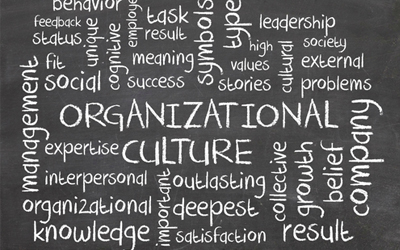
                    access training

                    Search the Training Catalog

                    • Competencies/Strategic Skills

                    • Priority Topics

                    • Settings

                    • Training Format

                    • Sponsor

                    • Training Year

                    • Reset Filters
                    Public Health Leadership Institute

                    Public Health Leadership Institute

                    by R-IV PHTC | Jan 13, 2020 | Training

                    Public Health Leadership Institute

                    Year:  2020  |  Competency/Strategic Skill:  Leadership and Systems Thinking  |  Priority Topic:  N/A  |  Setting:  In-Person  |  Format:  Live  |  Sponsor:  Emory University/Central Office

                    Overview:

                    This is an 8-month online and in-person program. Participants must apply to participate.

                    The Region IV Public Health Training Center has partnered with the J.W. Fanning Institute for Leadership Development at the University of Georgia to offer the Region IV Public Health Leadership Institute (PHLI). The PHLI provides training for individuals from across the eight states that comprise HHS Region IV (Alabama, Florida, Georgia, Kentucky, Mississippi, North Carolina, South Carolina, Tennessee). There is no fee to participate.

                    The PHLI is an 8-month experience providing 40 contact hours of interaction. The Institute consists of a virtual orientation, one in-person 3-day retreat, and 6 virtual sessions, lasting 1½ hours each. In addition to these sessions, participants will be asked to complete approximately 2 hours of intersession work between the virtual sessions.

                    By the end of the Institute, participants will be able to:

                    • Identify personal leadership strengths
                    • Address a leadership challenge through a self-directed adaptive approach
                    • Engage in peer consulting with Region IV colleagues
                    • Apply leadership competencies in the context of public health
                    additional information

                    Search the Training Catalog

                    • Competencies/Strategic Skills

                    • Priority Topics

                    • Settings

                    • Training Format

                    • Sponsor

                    • Training Year

                    • Reset Filters

                    Leadership and Multi-generational Dynamics: Mentoring a New Generation of Leaders in the Workforce

                    Leadership and Multi-generational Dynamics: Mentoring a New Generation of Leaders in the Workforce

                    by R-IV PHTC | Jan 13, 2020 | Training

                    Leadership and Multi-generational Dynamics: Mentoring a New Generation of Leaders in the Workforce

                    Year:  2018  |  Competency/Strategic Skill:  Leadership and Systems Thinking  |  Priority Topic:  N/A  |  Setting:  Online  |  Format:  On-Demand  |  Sponsor:  Emory University/Central Office

                    Overview:

                    This is a 90-minute recording of a live webinar.

                    This webinar will expose participants to both the challenges and benefits of a transgenerational workforce for public health professionals as it relates to the future of health and healthcare delivery in the United States. It discusses evidence-based research and strategies for mentoring and professional development in this environment. Participants will learn how to elicit feedback from partners, techniques for effectively mentoring individuals of different generations, and how to develop and implement strategies to enhance opportunities for professional development. Additionally, this webinar will teach participants how to assess staffing needs, evaluate qualifications of staff members and volunteers needed for programs, and develop and implement strategies to retain staff members and volunteers.

                    access training

                    Search the Training Catalog

                    • Competencies/Strategic Skills

                    • Priority Topics

                    • Settings

                    • Training Format

                    • Sponsor

                    • Training Year

                    • Reset Filters
                    Shaping Organizational Culture: The Role of Leaders

                    Shaping Organizational Culture: The Role of Leaders

                    by R-IV PHTC | Jan 10, 2020 | Training

                    Shaping Organizational Culture: The Role of Leaders

                    Year:  2016  |  Competency/Strategic Skill:  Leadership and Systems Thinking  |  Priority Topic:  N/A  |  Setting:  Online  |  Format:  On-Demand  |  Sponsor:  Emory University/Central Office

                    Overview:

                    This is a 90-minute recording of a live webinar.

                    Leaders in all levels of an organization take on many roles in leading people toward the strategic direction of the organization. One of the most important roles a leader plays is in shaping the organization culture. This webinar will introduce public health professionals to the essential tasks of effective leaders and highlight leaders’ behaviors, attitudes and values that shape an adaptive organizational culture. Participants will also learn about principles and strategies for helping an organization become less bureaucratic and more adaptive.

                    access training

                    Search the Training Catalog

                    • Competencies/Strategic Skills

                    • Priority Topics

                    • Settings

                    • Training Format

                    • Sponsor

                    • Training Year

                    • Reset Filters
                    Modern Mentorship: Growing Public Health Leaders

                    Modern Mentorship: Growing Public Health Leaders

                    by R-IV PHTC | Jan 10, 2020 | Featured Training, Training

                    Modern Mentorship: Growing Public Health Leaders

                    Year:  2019  |  Competency/Strategic Skill:  Leadership and Systems Thinking  |  Priority Topic:  N/A  |  Setting:  Online  |  Format:  On-Demand  |  Sponsor:  Emory University/Central Office

                    Overview:

                    This is a 90-minute recording of a webinar.

                    Now more than ever public health is doing more with less. How can we grow, retain and better engage our best resource: our people?

                    This webinar will expose the participant to mentorship as a way for Public Health to increase retention and engagement. Participants will be able to identify the value of mentorship, identify 4 models of mentorship, understand the benefits of having a mentorship program and identify some strategies for creating a successful program.

                    access training

                    Search the Training Catalog

                    • Competencies/Strategic Skills

                    • Priority Topics

                    • Settings

                    • Training Format

                    • Sponsor

                    • Training Year

                    • Reset Filters
                    Population-level Risks for Preterm Birth in the U.S. and Alabama

                    Population-level Risks for Preterm Birth in the U.S. and Alabama

                    by R-IV PHTC | Jan 10, 2020 | Training

                    Population-level Risks for Preterm Birth in the U.S. and Alabama

                    Year:  2017  |  Competency/Strategic Skill:  Leadership and Systems Thinking  |  Priority Topic:  N/A  |  Setting:  Online  |  Format:  On-Demand  |  Sponsor:  University of Alabama at Birmingham

                    Overview:

                    This is a 1-hour recording of a live webcast.

                    It is well known that preterm birth rates are higher in the U.S. than in other developed countries, and preterm birth rates are higher in Alabama than in many other states in the U.S. While our natural inclination is to look for weaknesses in the health care system or health care system access that might explain these rates, the preterm birth rate is actually not that responsive to changes in health care. This presentation explores an alternative explanation: that more child-bearing age women in the U.S. are exposed to some of the major population-level risks for preterm birth, compared to women in other countries. We compare exposures at the pregnancy, individual, community and policy levels and identify the key ways that the U.S. differs from other countries. We then consider which of these factors also differentiate Alabama from other states.

                    access training

                    Search the Training Catalog

                    • Competencies/Strategic Skills

                    • Priority Topics

                    • Settings

                    • Training Format

                    • Sponsor

                    • Training Year

                    • Reset Filters
                    TDH Commissioners Roundtable

                    TDH Commissioners Roundtable

                    by R-IV PHTC | Jan 6, 2020 | Training

                    TDH Commissioners Roundtable

                    Year:  2012  |  Competency/Strategic Skill:  Leadership and Systems Thinking  |  Priority Topic:  N/A  |  Setting:  Online  |  Format:  On-Demand  |  Sponsor:  East Tennessee State University

                    Overview:

                    This is a 90-minute recording of a live panel discussion.

                    This presentation shares the unique perspectives of Tennessee Commissioners’ of Health who served the State for over 30 years.

                    access training

                    Search the Training Catalog

                    • Competencies/Strategic Skills

                    • Priority Topics

                    • Settings

                    • Training Format

                    • Sponsor

                    • Training Year

                    • Reset Filters

                    Reimagining Innovation

                    Reimagining Innovation

                    by R-IV PHTC | Dec 24, 2019 | Training

                    Reimagining Innovation

                    Year:  2013  |  Competency/Strategic Skill:  Leadership and Systems Thinking  |  Priority Topic:  N/A  |  Setting:  Online  |  Format:  On-Demand 
                    Sponsor:  East Tennessee State University

                    Overview:

                    This is an 80-minute recording of a live lecture.

                    Dr. Ness discusses her statement,”The joy of producing surprising improvements in health and prosperity has become outweighed by societal caution. That caution embodies the fear that science might not produce the immediate pay-offs that we expect from our investments.

                    access training

                    Search the Training Catalog

                    • Competencies/Strategic Skills

                    • Priority Topics

                    • Settings

                    • Training Format

                    • Sponsor

                    • Training Year

                    • Reset Filters

                    Health Professionals for the 21st Century

                    Health Professionals for the 21st Century

                    by R-IV PHTC | Dec 24, 2019 | Training

                    Health Professionals for the 21st Century

                    Year:  2012  |  Competency/Strategic Skill:  Leadership and Systems Thinking |  Priority Topic:  N/A  |  Setting:  Online  |  Format:  On-Demand  |  Sponsor:  East Tennessee State University

                    Overview:

                    This is a one-hour recording of a live lecture.

                    Julio Frenk, Dean of the Harvard School of Public Health, discusses educating future health professionals in the 21st century.

                    access training

                    Search the Training Catalog

                    • Competencies/Strategic Skills

                    • Priority Topics

                    • Settings

                    • Training Format

                    • Sponsor

                    • Training Year

                    • Reset Filters
                    Disruptive Innovations in Public Health Education

                    Disruptive Innovations in Public Health Education

                    by R-IV PHTC | Nov 13, 2019 | Training

                    Disruptive Innovations in Public Health Education

                    Year:  2012  |  Competency/Strategic Skill:  Leadership and Systems Thinking  |  Priority Topic:  N/A  |  Setting:  Online  |  Format:  On-Demand  |  Sponsor:  East Tennessee State University

                    Overview:

                    This is a one-hour recording of a live lecture.

                    Dr. Ian Lapp, Associate Dean for Strategic Educational Initiatives, Harvard School of Public Health, discusses how massive open online courses (MOOCs) will impact higher education, noting that some suggest the modern university, as we know it, will be irrevocably changed.

                    access training

                    Search the Training Catalog

                    • Competencies/Strategic Skills

                    • Priority Topics

                    • Settings

                    • Training Format

                    • Sponsor

                    • Training Year

                    • Reset Filters

                    Region IV Public Health Training Center | All Rights Reserved | ©2026 This project is supported by the Health Resources and Services Administration (HRSA) of the U.S. Department of Health and Human Services (HHS) under grant number UB6HP31680, Public Health Training Centers for $4,348,992. This information or content and conclusions are those of the author and should not be construed as the official position or policy of, nor should any endorsements be inferred by HRSA, HHS or the U.S. Government.